Not all health behavior change advice is created equal, and some of the most repeated strategies in fitness coaching are doing more harm than good. SMART goals. Accountability buddies. Habit trackers. Rewarding yourself with new gym clothes for hitting the gym three times a week.
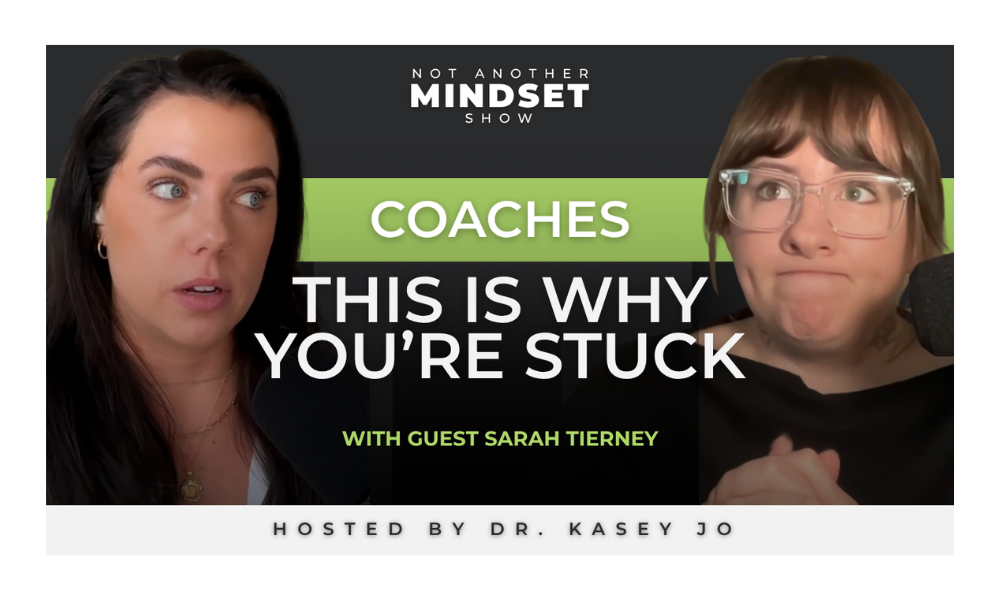
On this week’s episode of Not Another Mindset Show, my guest, Sarah Tierney, and I put the most common health behavior change advice through the ultimate filter: overrated, underrated, or accurately rated?
The answers might surprise you. 👀
SMART Goals: Overrated Health Behavior Change Advice?
You’ve heard of SMART goals: Specific, Measurable, Attainable, Realistic, Time-Bound. The framework has been around since 1981 and it’s everywhere in coaching. But when it comes to health behavior change specifically, my verdict is overrated, and the research backs me up.
The “S” and “M” hold up fine. Specific goals give clients an actual direction to follow, and measurable goals support the self-monitoring that research consistently links to better outcomes. But the framework falls apart from there.
The Attainable and Realistic criteria? There’s actually research showing that setting an “unrealistic” weight loss goal had no negative impact on people’s ability to maintain their results long term. And when you factor in that most clients are already operating with a fixed mindset about what they’re capable of, you risk having them set goals that are far too easy, which isn’t motivating for anyone.
Then there’s Time-Bound. Putting a hard deadline on something like weight loss or lifestyle change can set clients up for a shame spiral if they don’t hit it on schedule. In my SMARTer goal framework, I swap “time-bound” for timely, meaning goals that account for what’s actually going on in a client’s life right now, not just a countdown on a calendar.
I have a full episode on the SMARTER goal framework if you want the complete breakdown, but tune into this one first for the highlights.
Accountability Buddies: Good Health Behavior Change Advice or Overrated?
This one generated some nuance. Sarah’s take: accurately rated, and honestly, more useful than people give it credit for, as long as clients aren’t leaning on it as a permanent crutch.
The research behind self-determination theory supports social connection as a real driver of behavior. Being around people who normalize what you’re trying to do helps clients build the reps and makes a new behavior feel like a normal part of life. The problem is when a client needs someone else there every single time just to follow through.
That kind of reliance keeps motivation extrinsic. And extrinsic motivation doesn’t build the autonomous, self-directed drive that actually makes behaviors stick long term.
The sweet spot is using accountability as a momentum builder, especially early on. Someone nervous to go to the gym alone might need that first month of showing up with a friend. But the goal is for them to eventually show up regardless of whether anyone else is there.
The Problem With Habit Trackers
Habit trackers are popular. But most people using them aren’t actually tracking habits, they’re tracking behaviors. And those aren’t the same thing.
A true habit is something you do automatically, without thinking. If your bathroom faucet breaks, you still walk over and try to turn it on, that’s a habit. Going to the gym on Tuesday because you checked a box last Tuesday? That’s behavior tracking, and calling it habit tracking sets clients up for confusion about what they’re actually building.
The bigger issue is what I call Duolingo-style streak psychology. Research on Duolingo found that users with long streaks stop caring about learning the language, they just open the app to protect the number. And once the streak breaks, they often don’t come back. Apply that to health behavior tracking and you can see the problem: clients go through the motions to keep the streak alive, and one missed day tanks their motivation entirely.
That said, monitoring behaviors (done right) absolutely has value. Seeing proof of consistency over time can fuel a growth mindset and show clients they’re more capable than they thought. The key is keeping the focus on outcomes and meaning, not the streak itself.
Why Tangible Rewards Are Overrated for Long-Term Health Behavior Change
Treating yourself to new gym clothes after hitting a workout goal. Putting a dollar in a jar for every completed session. Rewarding yourself with a nice dinner if you meal prep every week.
Sounds motivating, right? Sarah and I both landed in the same place: overrated — at least as a long-term strategy.
The research on behavior change is clear that relying on extrinsic rewards makes it less likely a behavior will stick. If a client is going to the gym as a means to an end (the new leggings, the dinner out) they’re not building genuine connection to the behavior itself. When the reward stops, so does the motivation.
What I teach in the Health Mindset Coaching Certification is helping clients find personally meaningful, intrinsic reasons to keep going, sleeping better, feeling more energized, having time to themselves, showing up as a more present parent or partner. Those are the anchors that actually sustain health behavior change over time.
Treating yourself after six months of real consistency? Totally fine. But making a tangible reward the driver from the start? That’s a setup for the behavior to disappear the moment the reward does.
“Just Lock In” Is Not a Health Behavior Change Strategy
“I just need to lock in.” I hear this from clients constantly, and I’ve said it to myself about work tasks. But in a behavior change context, it’s a red flag, not a strategy.
The problem starts with vagueness. Lock in on what, exactly? If a client tells me they need to “lock in for 2026,” that’s not a plan, that’s an intention dressed up as a strategy.
“Lock in” language usually has all-or-nothing thinking coded into it. It implies white-knuckling through discomfort rather than building sustainable habits and intrinsic motivation. And the unspoken question is: then what? Are you locked in forever, or does this become another cycle of intensity followed by falling off?
When clients say they need to lock in, that’s my cue to dig into what’s actually driving their avoidance, clarify their real values, and build a consistency plan that doesn’t depend on willpower alone.
Is Picturing Your Ideal Self Good Health Behavior Change Advice?
This was the one that stumped both of us, and the most thought-provoking part of the episode.
Visualizing your best, most ideal future self is a staple of motivational health behavior change advice. And there’s real research behind future self-continuity, the more you identify with your future self rather than seeing them as a stranger, the more likely you are to make choices that benefit that future version of you.
But here’s the catch: who exactly is that ideal version? If the idealized self is perfect, always disciplined, never struggles, you’re not setting a north star, you’re setting yourself up for inevitable failure. There’s also a narrative buried in this kind of thinking that says who you are right now is insufficient. That you have to become a different person to achieve your goals.
That’s a fixed mindset problem. And it can quietly undermine everything.
My reframe: you are already enough to achieve your goals. You don’t need to fundamentally change who you are, you just need more skills, more practice, more support, more tools. The behavior change conversation isn’t about becoming someone else. It’s about building on who you already are.
The Bottom Line
Not every popular strategy actually serves your clients long term. SMART goals need an upgrade. Accountability has limits. Habit trackers are often tracking the wrong thing. Tangible rewards can backfire. “Locking in” is discipline language in disguise. And idealized-self thinking can quietly reinforce the belief that clients aren’t good enough as they are.
This is exactly why evidence-based health behavior change advice matters — because the most repeated strategies aren’t always the most researched.
Want to hear the full conversation including the moment I completely stumped Sarah on the ideal self question? Listen to EP 97 of Not Another Mindset Show now.
Want more on goal-setting? My SMARTER goal framework episode dives deep into exactly how to update these strategies for your clients.
Find me on Instagram: @drkaseyjo