

The lessons from coaching clients that stick with you most aren’t the ones you learned in a certification. They’re the ones that came from six years of being in the trenches — watching coaches struggle, watching them break through, watching them fall back in love with work they’d almost given up on.
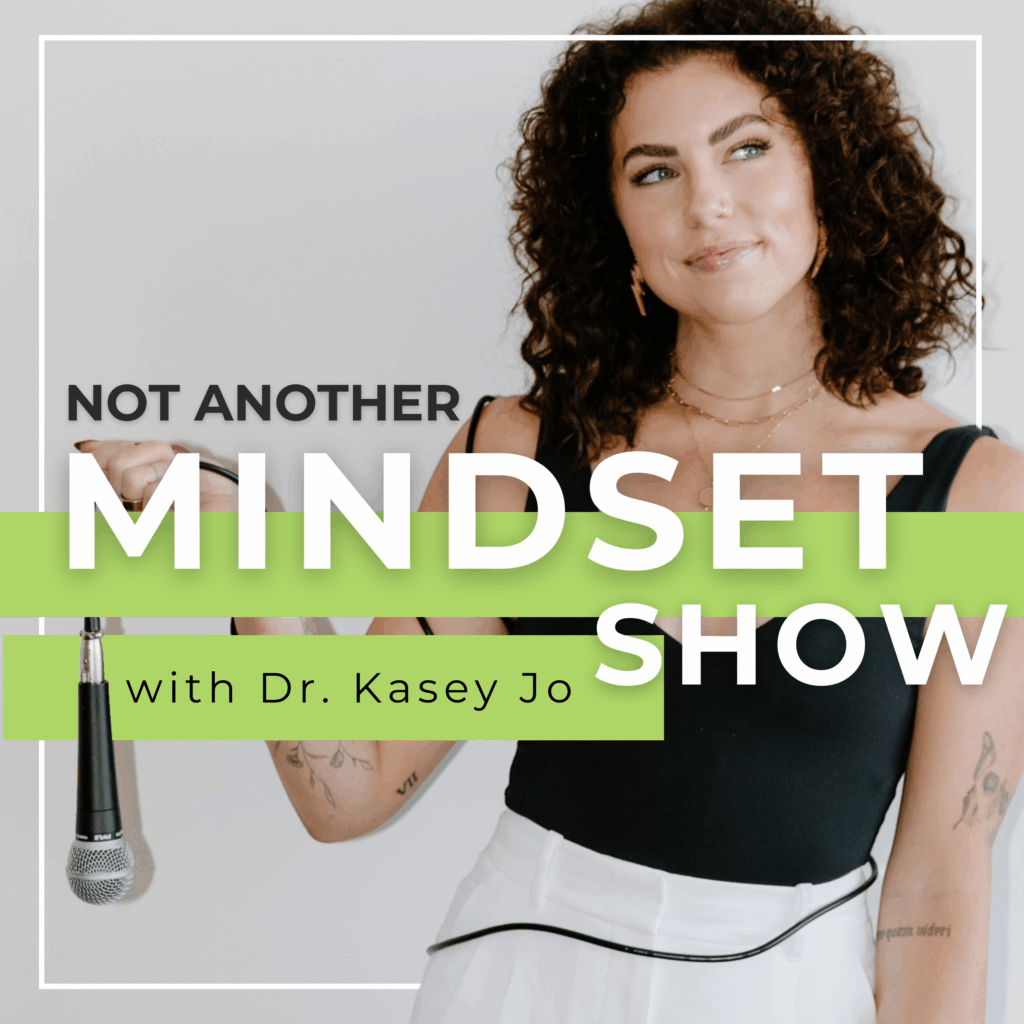
Episode 100 of Not Another Mindset Show. 1,000 students through the Health Mindset Coaching Certification. 85+ hours spent tearing the program apart and rebuilding it. Here’s what all of that taught me about what coaches actually need — and what’s actually holding them back.
What You’ll Learn in This Episode
- Why the coaches who care most often struggle the most with client self-sabotage
- The #1 thing holding coaches back — and it’s not skill gaps or marketing
- How imposter syndrome shows up even for coaches with 20+ years of experience
- Why the most effective coaches rarely tell clients what to do
- What it means to take your coaching seriously without taking it personally
What the Best Lessons From Coaching Clients Have in Common
Most of the frustration coaches bring to me isn’t about exercise science or nutrition protocols. It’s about the space between knowing what a client should do and actually getting them to do it — the psychological piece, the behavior change piece, the part nobody taught them.
And what I’ve learned after 1,000 students and 100 episodes is that the coaches who are most frustrated by that gap are almost always the coaches who care the most. The ones who don’t care? They chalk it up to the client. The ones who care carry it.
These 10 lessons are what I would not have known without the coaches who showed up, stayed stuck, pushed through, and trusted this process. They are the curriculum. These are the lessons from coaching clients — and coaching coaches — that changed how I teach everything.
What Does Research Say About Lessons From Coaching Clients and Coach Development?
Research on self-efficacy (Bandura, 1977) consistently finds that belief in one’s ability to succeed is one of the strongest predictors of performance. This applies to clients trying to build habits — and to coaches trying to build businesses. A coach operating from chronic self-doubt will struggle to close sales calls, coach through hard moments, and show up consistently, regardless of how much knowledge they have.
On the communication side, studies on motivational interviewing (Miller & Rollnick, 2012) indicate that coaches and clinicians who rely heavily on advice-giving and directive communication tend to see lower rates of client adherence than those who use collaborative, question-based approaches. The implication: most coaches are working harder than they need to because they’re using the wrong communication strategy — not because they lack knowledge.
Finally, research on professional communities of practice (Wenger, 1998) finds that practitioners who learn within a community of peers develop more quickly, with stronger retention of skills, than those working in isolation. For coaches — who are overwhelmingly solopreneurs — this is a structural problem. The absence of community isn’t just uncomfortable. It actively slows growth.
10 Lessons From Coaching Clients (and the Coaches Who Work With Them)
1. Coaches Who Care Most: The Hardest Lesson From Coaching Clients
When you genuinely care about your clients, client self-sabotage hits differently. You don’t chalk it up to the client’s problem — you absorb it. And because you haven’t been given the tools to coach through psychological barriers, you compensate by doing more: more hand-holding, more solutions, more step-by-step direction.
But that’s not coaching. It’s creating dependency. The harder you carry your clients, the less they’re building the muscle to carry themselves.
2. You Can’t Coach Someone Past a Ceiling You’ve Already Placed on Them
In other words, if there’s a quiet voice in the back of your head that says “this client will never change” — even if you never say it out loud — that belief will leak into your coaching. You cannot ask clients to have a growth mindset while operating from a fixed one yourself. What you believe about their potential shapes how you show up for them, whether you intend it to or not.
3. Self-Doubt: The #1 Lesson From Coaching Clients About What Holds Coaches Back
It’s not skill gaps, marketing, or pricing. Self-doubt. Building belief in yourself is always going to be the biggest driver of your success. Closing sales calls, posting consistently, coaching through hard moments — all of it requires self-belief. Without it, everything else is harder than it needs to be.
4. Even Coaches With 20 Years of Experience Have Imposter Syndrome
Inside HMCC, we have coaches at every skill level — brand new to 20+ years in. And no one is immune from “Am I actually good enough?” The goal isn’t to eliminate that feeling. It’s to leverage it. For more on this, Episode 62 on imposter syndrome goes deep on exactly how to do that.
The most experienced coaches I’ve worked with are often the most surprised by what they get out of HMCC — because experience doesn’t automatically teach you how to coach. It teaches you what to coach.
5. The Best Coaches Take Their Work Seriously, but Not Personally
Instead, take responsibility for your client results without letting those results define you. When a client struggles, the most effective response is curiosity — “let me figure out what’s actually going on” — not shame or self-blame. Taking it personally doesn’t help your client. It burns you out.
6. One of the Biggest Lessons From Coaching Clients: Stop Telling, Start Asking
Telling, prescribing, and advice-giving are deeply ingrained — especially with experience behind you. But one of the clearest lessons from coaching clients over the years is this: if your clients aren’t following through on the solutions you’re giving them, the answer is almost never a better solution. It’s a different communication strategy. For a practical breakdown of what that looks like, Episode 90 on coaching strategies for consistent clients is a good place to start.
7. Most Certifications Teach You WHAT to Coach — Not HOW
This applies to advanced degrees too. Specifically, the “how” — how to help someone actually follow through, stay consistent, and use the knowledge they already have — is almost never taught. This is why so many coaches spend more time chasing clients down for check-ins than actually coaching. HMCC is the only certification built specifically to help you use all your other certifications.
8. Surrounding Yourself With Other Coaches Is a Cheat Code
For most coaches, the reality is they’re solopreneurs — at their computers, working alone, without anyone around who actually gets it. One of the most consistent lessons from coaching clients and working with coaches inside HMCC is that community isn’t a nice-to-have. It’s a growth accelerator. Who you’re around determines your trajectory more than most people realize. For more on the role of persistence and peer learning, see Episode 92: The Science of Not Giving Up.
9. A Lesson From Coaching Clients No One Talks About: Falling Out of Love With Coaching
The most passionate coaches I’ve worked with have started to wonder if they even want to be coaches anymore — not because they stopped caring, but because no matter what they try, their clients still can’t stay consistent. Over time, that erodes everything. One of the things I’m most proud of is that HMCC has built a reputation for helping coaches fall back in love with this work.
10. These Skills Don’t Just Upgrade Your Coaching — They Change Your Life
Honestly, this is the one I didn’t expect. Across 1,000 students, the most consistent feedback isn’t just “my clients are getting better results.” It’s “this changed how I parent,” “this changed my relationships,” “this changed how I see myself.” Mindset and behavior change science isn’t just a professional toolkit. It touches everything.
Key Takeaways
- Self-doubt is the #1 barrier for coaches — not skill gaps, marketing, or pricing. Building self-belief is foundational to everything else.
- The most effective coaches ask, not tell. Research on motivational interviewing suggests advice-giving consistently underperforms collaborative communication for long-term behavior change.
- Experience doesn’t automatically teach you how to coach. Knowing what to prescribe is not the same as knowing how to help someone actually follow through.
- Your beliefs about your clients shape your coaching. A fixed mindset about a client creates a ceiling for them, whether you say it out loud or not.
- Mindset and behavior change skills are life skills — students consistently report changes in their relationships, parenting, and personal confidence, not just their coaching results.
Ready to Apply These Lessons From Coaching Clients in Your Own Practice?
Everything in this episode — the self-doubt, the imposter syndrome, the struggle with clients who won’t follow through — is exactly what we work through inside the Health Mindset Coaching Certification. HMCC is a 12-week, live certification program that gives health and fitness professionals the evidence-based psychology tools to help every client — including the ones who’ve tried everything — build real consistency and lasting results.
Next enrollment opens August 2026. Learn more at healthmindsetcert.com.
FAQs: Lessons From Coaching Clients and Coach Development
What are the most important lessons from coaching clients for health and fitness coaches?
Based on six years of working with over 1,000 coaches, the most impactful lessons involve the psychological side of coaching — not the technical side. The most effective coaches learn to ask rather than tell, take responsibility for outcomes without taking them personally, and build their own self-belief alongside their clients’. These are the skills most certifications never teach.
Why do health coaches struggle with client consistency and follow-through?
Research on motivational interviewing (Miller & Rollnick, 2012) indicates that directive communication — giving advice, prescribing solutions, telling clients what to do — is significantly less effective for long-term behavior change than collaborative approaches. Most coaches were never taught how to communicate in a way that builds client self-efficacy and intrinsic motivation. That’s the missing piece, not a better program or plan.
How does coach self-doubt affect client results?
Self-efficacy research (Bandura, 1977) suggests that a coach’s belief in their own abilities directly shapes how they show up — in sales conversations, in difficult coaching moments, and in their overall consistency. Coaches operating from chronic self-doubt are less likely to close sales, post consistently, or coach through challenging client situations. Building self-belief is not a soft skill. It’s a performance variable.
Can experienced coaches still benefit from mindset and behavior change training?
Yes — often more than they expect. Coaches with 10–20 years of experience inside HMCC consistently report the program is more impactful than anticipated, because experience alone doesn’t teach you the science of how to coach. Knowing what to prescribe is not the same as knowing how to help someone follow through, stay consistent, and actually use what they know.
What is the Health Mindset Coaching Certification?
The Health Mindset Coaching Certification (HMCC) is a 12-week, live certification program founded by Dr. Kasey Jo Orvidas, a behavioral psychologist and health coach. It teaches health and fitness professionals evidence-based psychology and behavior change tools to help their clients get better results, stay longer, and follow through more consistently. Learn more at healthmindsetcert.com.