
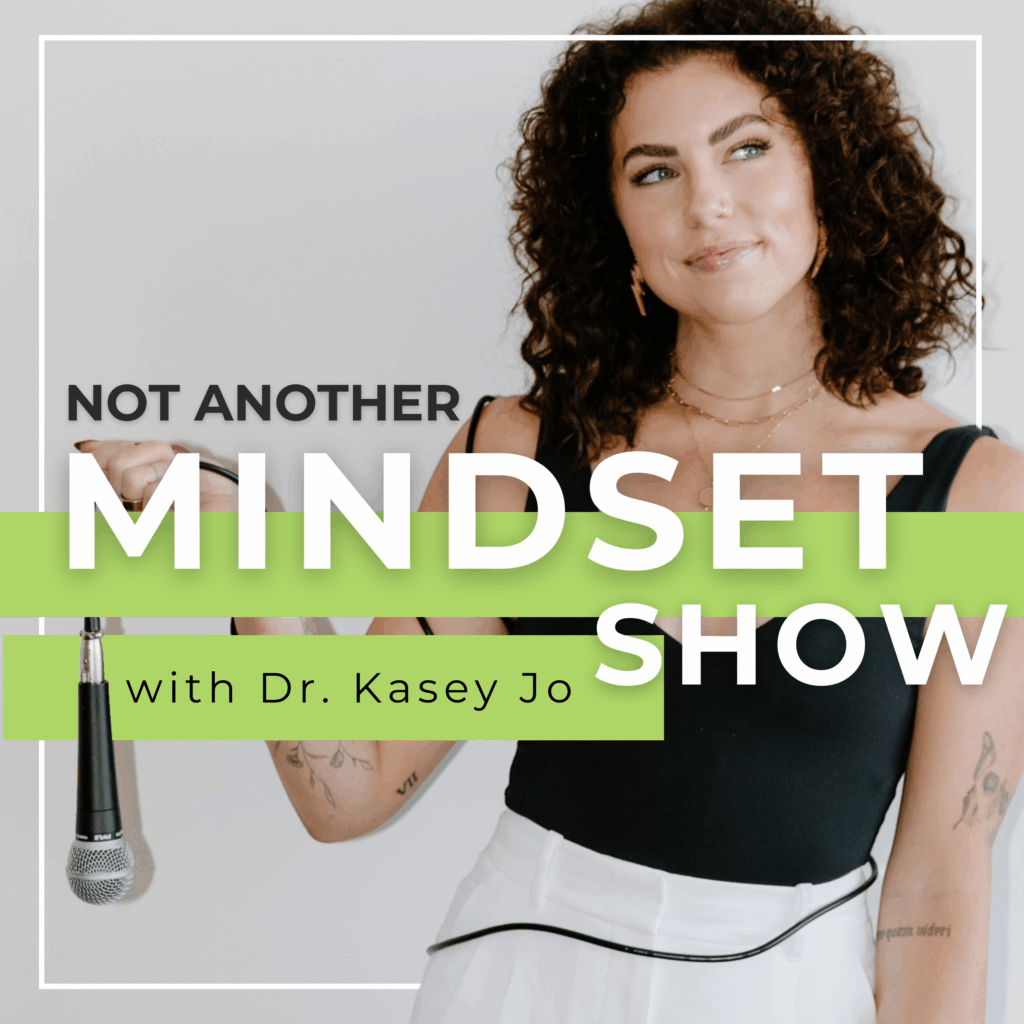

As tempting as it may be to just tell your clients what to do, there is a better way to coach them that will give them long-term results.
Fitness coaches, it’s time to go beyond just giving instructions.
In this episode, I do a deep dive into the popular client mindset of “just tell me what to do.”
I share why this strategy isn’t effective for long-term success and what fitness coaches should do to help their clients achieve true behavior change.
If you feel like you always have some clients that just keep self-sabotaging and can’t stick to the plan, no matter what you try, you’ll want to get your hands on my 5 FREE lessonsin behavior change and mindset. These lessons will help you coach your clients to overcome all-or-nothing thinking and fixed mindsets, stop getting in their own way, develop more self-control, and increase motivation and follow-through.
Episode Highlights
>>(1:58) Why clients say they just want someone to tell them what to do.
>>(5:14) How mindset plays a role in this scenario.
>>(8:49) Just telling clients what to do is going to diminish their sense of autonomy and personalization.
>>(13:25) Telling clients what to do comes from a good place, but there’s something you should do instead to help them achieve long-term success.
>>(16:51) Resources you can use to better support clients who say they just want you to tell them what to do.
Tune in to the full episode for details on how to coach clients for success.
Rate, review, and subscribe to my podcast.
If you enjoyed this episode, I’d be incredibly grateful if you could rate and review the show on your favorite platform. Your feedback helps me improve and allows others to discover the show. I want to hear from you whether you’re loving the insights or have suggestions on how I can make the show even better!
Simply scroll down to the review section on Apple Podcasts, Spotify, or wherever you listen, and leave your thoughts. Your support means the world to me and helps me continue to bring you more of the content you enjoy.
Links From the Podcast
Episode #59: Stop Overthinking: How to Trust Yourself to Make Better Decisions
FREE motivational interviewing cheat sheet
Want me to answer your questions on my next Q&A episode? Drop your questions here!
More podcast episodes from Not Another Mindset Show
Health Mindset Coaching Certification Instagram
Getting started with the Health Mindset Coaching Certification (5 FREE lessons included!)
Episode’s Full Transcript
That’s what got you here. Let’s do more of that. This is what’s gonna make you successful. So really like honing in when you see it and also emphasizing the importance of it. Hello my friends and welcome back to not another mindset show. I’m your host, Dr. Kasey Jo. My goal with this podcast is to take the science of mindset.
And behavior change and distill it down into actionable takeaways for you. Together we’re gonna unpack research around motivation, self-sabotage, willpower, and so much more, and we’re going to take all of that and translate it into strategies you can immediately apply to your health, fitness, relationships, business, marketing clients, all of the things.
But just to be clear, it’s not all serious and sciency around here. We’re gonna have a ton of fun too, and I’m so excited to share all of this with you. Alright, let’s go ahead and get into the episode. Hello my friends, and welcome back to not another mindset show. Today we are talking about a very common comment.
That we get from our clients. Common comment that we get from the clients. However, you have also maybe said this yourself before. I just need someone to tell me what to do. We’ve heard it before. We’ve said it before. It is, it is a common comment. So what I will say is instructing your clients, telling them what to do, even if they ask for it.
Isn’t enough, and it’s definitely not enough if we’re actually hoping to help our clients make behavior changes that last long term. So we’re gonna walk through why people say this in the first place, whether it’s the clients or maybe it’s yourself, and just try to better understand yourself here, why it makes sense that people are looking for that from a psychological perspective, but then also on the flip side of that, white’s actually not the best thing for them.
So. Why clients think they want direct instructions. Why is this the first thing is it makes sense from sort of a comfort and security perspective. And you may be like, what do you mean comfort? Security? When people are getting told what to do if you, if you really think about it, clear instructions, provide a sense of certainty.
And when we are living in a space of feeling uncertain, not knowing what to do, we’re second guessing our decisions. We can’t make a decision ourselves. We just wanna push off that responsibility to someone else. When you’re in that place, it can feel like the way to resolve that discomfort of uncertainty.
Is to just get clear instructions of what to do next. So it makes sense. It makes sense that people would be looking for that because they’re feeling like so all over the place and there’s so many different things and diets and things that they could try and whatever, and they don’t know what’s best for them.
They just want you to tell them what’s best for them. And there’s layers to this, right? Because you can have a conversation with clients and say, okay, this is what you’re currently doing. I do believe if we were to make some shifts and maybe try this or do this other thing, that it would be a lot easier and more effective for you.
That is different than just immediately providing solutions when clients are struggling and telling them what to do, giving them a protocol, a game plan, whatever, and just expecting them to follow it. There’s just, there’s so much more to this, so. Having clear instructions can reduce anxiety and feelings of uncertainty and not.
And being worried that you’re gonna make the wrong choice. And now you don’t have to worry so much because you’re going off what someone else says. And this is very similar to what I was discussing and a in a most recent, um, podcast episode about decision making. I’ll make sure that that is included in the show notes if you wanna dive into that.
’cause that’s kind of, it’s, it’s the same idea where we seek. Outside information. We seek external something to help us make a decision. When we’re struggling to figure out what the right decision is ourselves, we go to people. We go to Chachi, bt we go. We go to all of these different places rather than just like sitting it with it ourselves and making a decision and trusting our own decision.
We try to push the responsibility off onto other people, and that is similar to what we see clients doing because they don’t wanna make the wrong decision. They don’t wanna do the wrong thing for them. They don’t wanna keep spinning their wheels, so they just wanna be told what to do. They also tend to have a quick fix mentality, and that is why we have a billion dollar, multi-billion dollar diet industry.
That is absolutely full of all of these different types of quick fix diets. 30 days, this 21 days that people want immediate solutions, they want instant gratification. We are literally wired this way, which is why the multi-billion dollar diet industry is a multi-billion dollar industry. It’s kind of like preying on this desire for instant gratification and immediate solutions.
So. What happens here though is that it’s become so much less about mastery and so much more about outcomes, which immediately makes me think growth versus fixed mindset. With a growth mindset, we want to master the skills so we can keep doing the thing forever, and that makes us feel good and we wanna get better at something.
Whereas with a fixed mindset, it’s just like, I don’t care how I get there. I don’t care if I’m learning anything. I just wanna get there. And a lot of that, and I say that’s fixed mindset because a lot of that comes from people not believing in their abilities to actually do it themselves or to learn the thing themselves.
So they would rather just outsource and have someone else tell them what to do. So as we know, or as you should know, if you’ve listened to at least a couple episodes of this podcast, having a growth mindset is much more likely to make you successful. It is especially successful for long term in comparison to having a fixed mindset.
So we’re not really even just working with a, with a quick fix mentality. We’re working with a fixed mindset here. The other thing, the other aspect as to why clients may be just seeking for someone to tell them what to do or perhaps why you’re seeking that yourself is external motivation. What we want to do is really examine clients and just like people in general and how they might feel motivated by an external authority.
Like if someone else is telling me to do it, then I’m more likely to do it than me telling myself there’s actually like. A big underlying issue here because you’re not gonna have someone telling you what to do all the time. You’re not gonna have someone like sitting behind you in your mind before you have to make a check-in that week with your coach.
Your coach is sitting behind you like, what are you doing? Are you tracking your macros? Are you going to the gym? Like you’re not gonna have that stuff all the time. So our goal as coaches should be to set our clients up for success so they can continue to be successful, even if they don’t have the external motivation from us, and the fact that they have to check in with us and that kind of level of authority is not great for behavior change.
Because if they’re only doing things for you and to not disappoint you, there’s no way they’re gonna keep doing this long term. So instead, ugh. Before I get into that, what I do wanna say is that it’s not necessarily a bad thing to be holding accountability for your clients and ha being that person that they are accountable to.
I think that can be really helpful, especially when you’re just like getting off the ground with health and fitness behaviors. But we just wanna be careful that that doesn’t become their main source of motivation, is just to like not disappoint you and to do things that you told them to do. So. What we could be doing here instead is really helping them realize that they can make decisions and then they’re the expert on themselves and their lives and their goals and their desires and their preferences and all of these things.
And yeah, sure we’re the authority figures when it comes to fitness and nutrition, but they have so much information that is going to make them successful. So if you were to just tell them what to do without. Working together, it’s actually not gonna be that fruitful of an endeavor. So explaining that to your clients can be really helpful.
So I’ve kind of already explained some of like the limitations of just telling your clients what to do, but I do want to get into this more in more depth. So the thing I’ve been kind of like chatting about with all of this is that it’s really just supports a lack of autonomy. So. Being told what to do again is coming from this external motivation when the reality is we should be helping our clients develop motivation of their own and intrinsic motivation and varied types of motivation that are related to their personal beliefs and their identity and their values and their enjoyment and their satisfaction, all of those things.
So we need to be focusing on that, building autonomy with our clients instead of just telling them what to do all of the time. It also really limits personalization. So for all of you coaches out there who are talking about your one-on-one coaching offer and how it’s a hundred percent personalized, but then they start to work with you and all you do is just like tell them what to do all of the time, it’s you’re actually limiting yourself in your ability to.
Be fully personalized, that 100% personalized because you’re just going off of, which is fair, going off of your years of experience or all of the other clients you’ve worked with or what’s worked for you. And you’re saying like, oh, you’re struggling with this. Just go do this. When the reality is you need to be asking more questions to better understand that client, to personalize your recommendations.
And in fact. You should be involving them in what to do next, not just telling them what to do next. And overall compliance adherence that is driven by external instruction often lacks like the overall intrinsic and internal. Desires needed for lasting behavior change. So all fine and good if you’re the type of coach who just wants to work with clients for a three month time span and tell them what to do and then cycle in a new client after that.
But if you wanna work with people for six months, 12 months longer, then there needs to be less telling and more. Actual coaching, which is guiding, which is asking questions, which is a collaborative effort rather than just telling them what to do. So what clients actually need for sustainable change, they need empowerment and ownership.
You’re literally taking away both of those things by just telling them what to do all the time. So we need to help them get to a place where they see themselves in the driver’s seat and you’re just. Next to them in the passenger seat holding the GPS, they are the ones that are still ultimately making the decisions and you’re having conversations with them about what’s right for them.
We need to help them recognize that skill development is important, and I think that’s, it’s the sad truth is that so many people don’t care to develop the skills. Remember I was, I was saying before that that could be related to having a fixed mindset. That they just want the outcomes without actually having to master any of the in-between skills.
So this isn’t just you coaching this way, but it’s also explaining to your clients why you coach that way. Explaining to them how if they develop this skill or they learn how to do this thing, or when they do develop a skill, or when they do learn something, that you are focusing on that, that you are saying.
Look at how much better you are getting at this due to your time and dedication and effort. That’s what got you here. Let’s do more of that. This is what’s gonna make you successful. So really like honing in when you see it, and also emphasizing the importance of it. And of course, building intrinsic motivation.
Reasons why they want to do these things, what’s going to be enjoyable for them, what’s related to their personal beliefs, values, identity, all of that stuff. Spend time on that with your clients and if they start to see that, they start to feel that they won’t even want to be told what to do. Sure.
They’re looking for direction, they’re looking for guidance. They’re looking for you to be their coach, but they will want it to be a collaborative experience because it’ll be, this is what I enjoy and this is what’s fun for me and this is what I’ve really got out of it. Can we do more of that? And how can we do more of that rather than you just saying do that.
So we’ve talked kind of like in between the lines of all of this. Just like why in general just telling clients what to do is pretty ineffective. I wanna go into that just a little bit more here because so much of this comes from, and I know I’m kind of like out here shouting like, stop doing this, do this other thing.
But the reality is, so much of this is coming from a good place. You want to help, you want to help your clients. So when they’re struggling, when they’re frustrated, when they’re not seeing the progress that they want, you just wanna fix it so badly. What do you do? You immediately provide solutions. You say, okay, no worries.
Let’s try this instead, let’s do this thing. Let’s try that. Let’s go over here. Let’s go over there. And that is actually something that is termed the writing reflex inside motivational interviewing. And it’s this reflex that we have to make things right. But in this case, you are, you’re, you are trying to make things right, but that’s actually hindering your ability to help your clients because you’re not helping support their autonomy.
You’re not helping them make decisions on their own, develop their motivations, all of these things. And you also have to see where this approach, by just telling your clients what to do all the time, really just sets you up to get blamed. So now it’s, well, you told me to do this and it’s not working, so this is your fault.
And I also don’t want you to be in that position where you have clients coming to you and saying. This is your fault. Like this is what you told me what to do. It’s not working. I can’t stick to it. And now suddenly it’s entirely on you because you were the one who were prescribing the to-dos. So instead making a collaborative effort, no one’s really to blame ’cause it was something you guys worked on together and now it just means you need to continue to tweak it together.
So we also just want to talk. Too about how just telling clients what to do all the time really prevents them from developing any critical thinking on their own, any level of resilience. Because they will just come to you anytime they’re struggling and you will just tell them how to quote, unquote fix it instead of them sitting with that and thinking, man, why didn’t this work for me?
Like, what can I. Understand from this situation, thinking critically, building resilience to challenges, all of those things that are honestly a big part of having a growth mindset. So in some way here, by just telling your clients what to do all the time. Again, even if they asked for it, you may actually be promoting more of a fixed mindset than a growth mindset.
And if you feel like you have needy clients, anyone out there feel like they have needy clients, this might be why. Because they’re so used to you just telling them what to do and providing solutions on a silver platter that they don’t actually have to think for themselves. So if you feel like, gosh, this person’s always blowing me up all the time.
They always have so many questions. They’re always struggling. I can’t keep up. Like this is draining. There is a chance, my friend, that that has to do with the way that you’re coaching that person. Tough pill to swallow, but. If you can come to that realization, you actually have so much power to make a difference in how your coaching feels.
So you don’t get stuck with all of these clients who are just like constantly needing you for everything, and instead you’re supporting their autonomy and helping them come up with the decisions on their own. And it feels like this collaborative effort that gets easier and easier and easier over time.
That’s what I want for all of you. Okay. So on that note, some resources I like, I feel like I don’t wanna just leave you guys on. Explaining to you why this is ineffective and why clients want it, but it’s actually not that great for them. There are some free resources I can give you. I do have five free lessons in mindset and behavior change coaching that you can grab as soon as you sign up for the wait list for the Health Mindset Coaching certification.
The wait list doesn’t secure a spot for you. It doesn’t like commit you to anything. It does. Though give you updates on future enrollments for the certification and five free lessons in the meantime. So I’ll make sure that’s in the show notes. And also, I mentioned motivational interviewing. This is a really well validated communication strategy method way of being when you are communicating with your clients, when they’re struggling with ambivalence or, um, struggling to stick to the plan.
So I have a cheat sheet with some questions that you can ask your clients some ways of going about. Everything that we were talking about, so you aren’t falling prey to that writing reflex that I mentioned where you just want to immediately fix things. So that cheat sheet is also gonna be in the show notes, but overall, I hope this episode just got you thinking a little bit more.
When clients come to you and they, they say, I just need someone to tell me what to do, and you have a response for them where you can say, listen, I’m not gonna just tell you what to do all the time. A lot of coaches will do that. But then you’re not gonna be set up for success. And here’s the thing, I don’t want to work with you forever.
I don’t want you to pay me forever. I wanna work with you for a consistent period of time where you see some amazing, incredible results and you learn all of the skills that are required to get to those results so that when we do part ways that you can continue to be successful without me. And that requires me not just telling you what to do all the time, but us having a collaborative coaching relationship.
There you go. There’s your next sales script. So that like expectation setting I think is really important with clients if you do this style of coaching, so that they’re not just expecting that and you’re also explaining the utility, the why behind why you’re doing those things, because then they will also be so much more bought into the process and be looking forward to that and see your coaching as something different and.
In this day and age, boy do you need to be different and set yourself apart from the sea of online health and fitness coaches. So, okay, I’m gonna wrap it up there. And I will see you next time. Thanks so much for being here, and that’s a wrap for today’s episode of Not Another Mindset show. If you enjoyed today’s episode, don’t forget to hit that subscribe button so you get notified of the next one, because if you’re anything like me, if the episodes aren’t popping up for you automatically.
You’ll keep forgetting to come back to the show even if you really, really enjoyed it. So go ahead and hit that subscribe button and make it super easy for you. And of course, if you wanna see more episodes just like this one, I’d love for you to let me know by leaving a review. I know, I know it’s super annoying to do, but the few seconds that it takes means the world to me and also ensures that I can keep providing free education and value to you and just to sweeten the deal.
I am going to be picking a random reviewer every single month to receive a free workshop or product from me. If you’re looking for more free resources or just wanna connect, hang out, chat a little bit, come find me on Instagram. I’m Coach Kasey, Jo over there. That is where I hang out the most in the land of social media.
Alright, my friends, that is all I have for you this time. I so appreciate you being here and love to see you prioritizing your growth. I’ll see you next time.