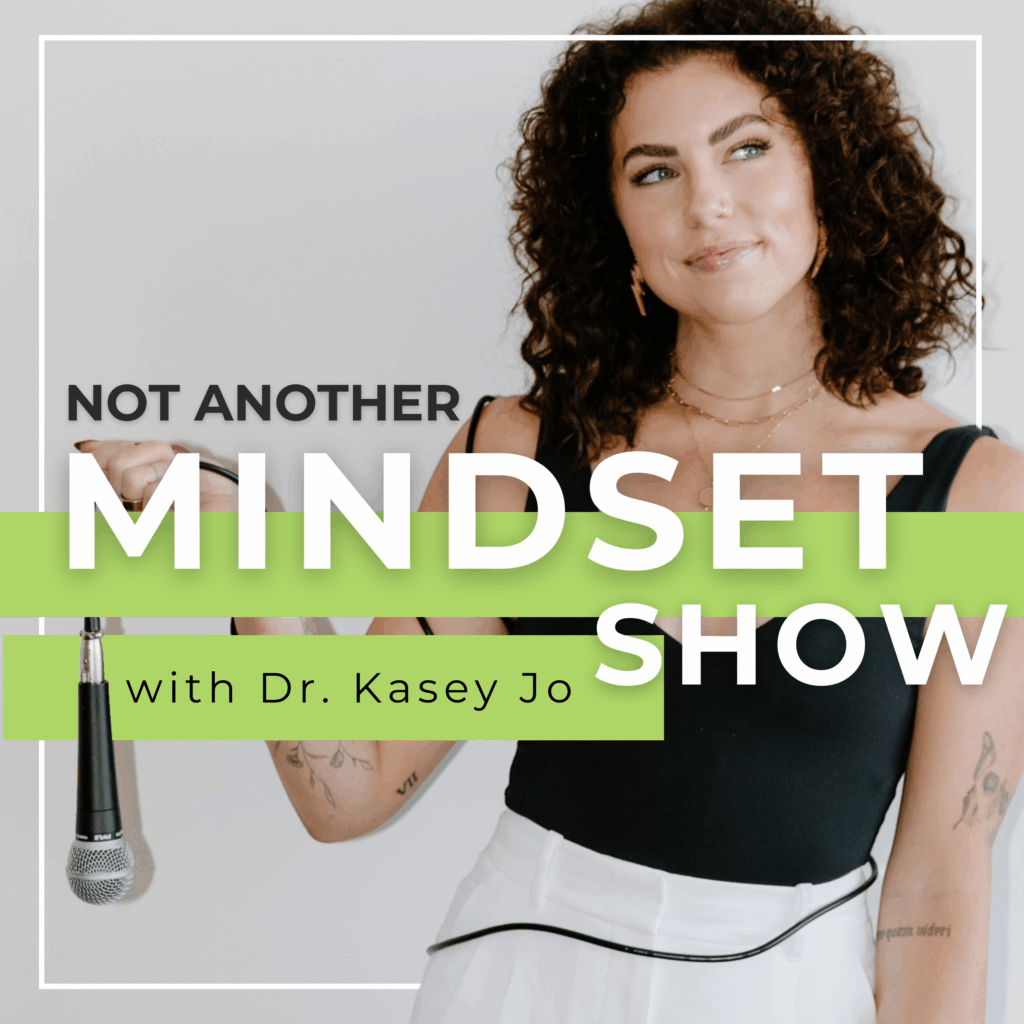

These mindset shifts will impact how you approach your business so you can move the needle forward.
Entrepreneurship is fun, until it isn’t.
In this episode, I talk about the three things entrepreneurs need to rethink when it comes to their business mindset. I share how people commonly approach entrepreneurship, where these things may cause challenges, and mindset shifts that can increase success.
If you feel like you always have some clients that just keep self-sabotaging and can’t stick to the plan, no matter what you try, you’ll want to get your hands on my 5 FREE lessons in behavior change and mindset. These lessons will help you coach your clients to overcome all-or-nothing thinking and fixed mindsets, stop getting in their own way, develop more self-control, and increase motivation and follow-through.
Episode Highlights
>>(6:03) What to do when business starts to feel monotonous and you lack inspiration or excitement.
>>(14:20) The importance of doubling down on what’s already working in your business.
>>(23:12) The issue with future-self thinking and how it impacts your business.
Listen to the full episode to learn more about your business mindset to put yourself on a path to greater success.
Rate, review, and subscribe to my podcast.
If you enjoyed this episode, I’d be incredibly grateful if you could rate and review the show on your favorite platform. Your feedback helps me improve and allows others to discover the show. I want to hear from you whether you’re loving the insights or have suggestions on how I can make the show even better!
Simply scroll down to the review section on Apple Podcasts, Spotify, or wherever you listen, and leave your thoughts. Your support means the world to me and helps me continue to bring you more of the content you enjoy.
Links From the Podcast
Growth Collective Business Mentorship Interest Form: https://www.healthmindsetcert.com/GCinterest
The Psychology of Signing More Clients
Transform Your Forms DIY Workshop
Want me to answer your questions on my next Q&A episode? Drop your questions here!
More podcast episodes from Not Another Mindset Show
Health Mindset Coaching Certification Instagram
Getting started with the Health Mindset Coaching Certification (5 FREE lessons included!)
Episode’s Full Transcript
We need to look at the clients. Who did sign up with you? Was there a specific post that got their attention? How long were they in your audience before they got off the fence and decided to actually hire you as a coach or buy your product? We need to really dissect the whole situation in order to know what needs to be tweaked rather than a full strategy overhaul.
Hello my friends, and welcome back to not another Mindset show. I’m your host, Dr. Kasey Jo. My goal with this podcast is to take the science of mindset and behavior change and distill it down into actionable takeaways for you. Together we’re gonna unpack research around motivations, self-sabotage, willpower, and so much more, and we’re going to take all of that and translate it into strategies you can immediately apply.
To your health, fitness, relationships, business, marketing clients, all of the things. But just to be clear, it’s not all serious and sciencey around here. We’re gonna have a ton of fun too, and I’m so excited to share all of this with you. All right, let’s go ahead and get into the episode. Another mindset show.
I had something entirely different planned for this episode, however. We just wrapped up our mid-year retreat for the Growth Collective. That is my one-on-one business mentorship mini mastermind type of container. I only have between. Five and like maximum 10 people in this business mentorship container, the growth collective at any given time, and we open up spots for enrollment two times per year and essentially right around the same time that we’re opening up spots, it just so happens to be like mid-year and end of year.
I do that on purpose, so. You’re either halfway through the year or you’re ending the year and starting a new year and you’re looking for some support in your business. And that’s where I come in. And then we do our retreats around that same time of year because we’re checking in on how things have been going for the first half of the year, what needs to happen to the last half, or we have a retreat usually in December where we’re, we’re essentially.
Doing a massive overview of what happened in the previous year and big plans and just really mapping out exactly what needs to happen in the following year. So anyway, I digress. We just had our June retreat. I am recording this in June, even though you’re probably not listening to this until August, potentially even September.
Um, but it’s still very relevant and it really sparked a lot of inspiration for me, which it always does. I had. Obviously so many of my friends asking me how the retreat went and what I thought of it and how everyone did, and I literally said to every single one of them, this happens every time, every single retreat.
It exceeds expectations because it’s such a small group. We had. Three members at this retreat, we were supposed to have five, but a couple had some things come come up that they couldn’t come last minute to the retreat. But when you have such a small group and we literally get number one, we get a cool ass Airbnb that everybody stays at, and we just workshop the heck out of our businesses for two straight days, and it is.
A lot, but a lot in the best way. And of course they all leave with new strategies and ideas and ways to optimize things in their businesses. And I leave with ideas and inspiration as well, which is exactly why I’m recording this podcast. So we kind of had some major themes come out of this retreat weekend and.
They’re significant enough that I didn’t wanna just keep them to myself or keep them within the Growth Collective container. And there were so many things I could touch on in this podcast, but I did try to keep it relatively concise. And as it turns out, when I was writing all of this down and kind of mapping out this podcast episode, it was all things that I think most, if not all entrepreneurs need to either remember.
Or need to rethink in the first place. So this first one we chatted a lot about, just seeking more passion and inspiration in your business once you’ve been a business owner for years, which all of the people in the Growth Collective have been business owners for. At least a period of time. I work best with people who are, I say like sort of intermediate to advanced business, and they’re looking to scale rather than like brand new beginners have never created an offer in their business before.
I work best and I’ve learned this over four years of running the growth collective, that those are like my people and that’s who I am best suited to help. So when you get to this stage. You kind of, especially if we’re talking about health and fitness coaching, and this is like a direct example that came up that once you’re a beginner stage business and fitness coach, you are so stoked to do everything.
When a client needs a new workout program or you just got a new client, you have to do all the onboarding. It’s so exciting and you are like blown away that you get to do something that you love. Write workout programs, nutrition plans, whatever. And make money from that. And then as time goes on and you start to wear more of the CEO hat and really, really lean into like, no, I run a business.
There’s so many other things that kind of pull your focus away from the actual client fulfillment process, but it doesn’t even have to be that. It could be anything. You may have been so excited to like set up your first application form or your first website page or whatever. Your Instagram make Instagram posts, and then over time it kind of becomes like a ugh.
Oh yeah, I have to keep doing that. Like forever it becomes less novel and more monotonous. So one thing that all of the girls who were at the retreat came to when we had a discussion at the beginning was. What are you looking for in this retreat? What do you want to come away with? And all of them said some kind of form of like, I’m looking to be inspired.
I want more inspiration. I want to like inject some more passion into what I’m doing. And let me tell you, that was absolutely succeeded by the end of the retreat for myself included and with this conversation. This like lacking inspiration over time type of conversation from used to feeling so stoked to do some of the stuff in your business, and now you’re not feeling that way anymore.
What came up was in some ways, like a sense of guilt because we’ve all built these businesses out of nothing and. These businesses afford us so much freedom. We get to work from home. We can set our own schedules, we get to decide how things are done, don’t have to set an alarm in the morning, you know, all of that stuff.
So when you’re starting to lack some inspiration or feeling that same kind of fire and drive that. Maybe you used to, you start to feel guilty, like, why I have this amazing thing on my hands and I am dreading doing these specific tasks in my business now. Like what’s up with that? And also just in general, once you get more task heavy in the business and you’re doing so many different things to grow and bring in more leads.
And develop sales pages and all that stuff. You can start to lose a lot of just like, again, the passion and the creativity and the inspiration behind it all. And so where this conversation went was how, and this is something I want you to think about, and this is sort of like the. The crux of this conversation is how we get all of these messages from places online, be it social media or blogs, or just in a conversation with other people, and how many times we’ve heard this phrase, if you do what you love, you will never work a day in your life.
And so I brought up this quote in this conversation that I was having with my mentorship client. And ask them, and this is what I would also ask you, is how much of that kind of messaging that’s out there is actually impacting how you view your work and your day-to-day life and the tasks that are at hand because.
It kind of becomes this. Either you have this nine to five job where you’re working for someone else, and you may like some aspects of it, but most of it you’re just working for the sake of working and making money so that you can actually have the money to do the things you want to do in your life.
And then on the other side of the spectrum, there’s like this idealistic entrepreneur who gets to do what they love and make money off of it, like. There the sky is the limit and there’s no ceiling on your potential and everything is so fun and amazing and you have so much freedom and it’s blah, blah, whatever.
So those are like the two options. And when we get these messages all the time of like, oh, we’ll do what you love and you’ll never work a day in your life, then it kind of becomes, oh, well if I’m not enjoying some aspects of my business and being a business owner, being a coach, what? Whatever it is for you.
Often, all of the above. For many of you listening, um, it becomes, well, I’m not loving all of this, but shouldn’t I be, shouldn’t I be loving every single second of this thing that I created? Wasn’t that the point of not working for someone else and working in a cubicle from nine to five, Monday through Friday?
But there’s a gray area obviously, like there is with, with everything and so much nuance to it. And. The question becomes, do we really need to love every single thing we do in order to fit this ideal version of the entrepreneur who never quote unquote, works a day in their life because they love what they’re doing?
So even with the not so fun stuff, or when things start to feel a little bit monotonous. I do think, and this is a little bit like cheesy cliche to say, but like gratitude is the cure, right? Like always coming back to okay, sure, maybe it doesn’t feel like this amazing, idealistic, entrepreneur vision all of the time.
It doesn’t feel that way all the time. There are some tasks I don’t really love doing. I am starting to feel like a little bit monotonous with some of the stuff I’ve been doing for years, but I wouldn’t rather be doing anything else. So regardless of some of these things in my business that I don’t really wanna be doing, it doesn’t matter because there is nothing else I want to be doing instead.
Sure. Maybe those tasks aren’t my favorite, but I will die before you put me in a cubicle. Right? So. A little bit of gratitude in those times can go a long way. So we did spend some time talking about that. Like what are those things in your business where you feel like you’re not as creative or inspired or don’t have the drive that you used to, and how can we maybe reconcile that with some gratitude for where we are at and how many people.
How many people would kill to be in your position? And I’m so aware of that, how many people would kill to be in my position. And I know many would because they’re in my dms asking how I’ve done what I’ve done. So that really helps ground me and to be honest, for myself in my life. Yeah, there’s stuff in the business that is just like, oh, I gotta do that again.
Or I don’t wanna sit down and podcast today. Um, or when things are piling up and it just like feels that there’s just too much on my plate. That’s where I always go to next. It’s, but holy shit, how cool is what I get to do? And even if it means I have to stay up till 11 at night, like finishing some of this stuff up, I’m still interested in that work compared to any other option of work that I could be doing.
So. That is something to always kind of come back to. It’s like, well, this is the best option actually. It’s just sometimes it feels kind of like draining or blah or monotonous, and I don’t really think in order to love what you do and quote unquote never work a day in your life, that doesn’t mean you have to love every single task at every single second, but ultimately, I think what we need to come back to with this.
Phrase is, do you love overall the work that you get to do? Because already if you have that, you are so far ahead of so many people. I have so many people in my life that literally go to work just so they can pay to do the things that they actually love to do in their lives that they’re actually interested in.
And it is truly just a job. And there’s aspects of it that they enjoy more than others, but it’s a job. And so if you, even right now as a business owner, get to do something that you’re interested and passionate about and build something that, that’s amazing. That’s incredible. How can we just come back to that in those moments of like, Ugh, I have to do all of these things.
And like, do I even really wanna be doing this? Should I, should I just go get hired by someone else? Because man, come back to those things and I would really encourage you to think about this, this phrase of if you do what you love, you’ll never work a day in your life. And also just generally the messages around like what an entrepreneur or what a business owner is compared to someone who’s working a, a nine to five job working for someone else.
And the like, the really, really stark contrast that is portrayed out there and how that affects you. Okay. The next major thing that became literally the theme of the weekend without even trying is to double down on what’s already working. And this is something that I’m talking to my mentorship clients about all of the time.
It is something that I actively do in my business. In fact, it was a huge focus for us this year to do this thing. And it is to, yes, double down. On what’s already working, what you already have at your disposal. At your disposal. We talked a lot about like the word leverage and where can you leverage things that are already going well, that are already working for you, and just up the ante make it even better, optimize it, rather than immediately going like, what else do I need to create?
What do I need to do differently? For example, we talked about, okay, in the past, like three to six months, where did your new clients come from? And there are a lot of coaches out there who don’t even track this. So did they come from your Instagram? Did they come from your team’s Instagram, did they come from a podcast?
Did they come from a referral? Was it a Google search? Was it a blog? Where did they come from? And where they came from means that that funnel is working in some regard. So rather than sitting down and going, I need more clients, where else can I go find them? No, no, no, no. Let’s talk about where your current clients came from and just leverage that.
Do more with that. So. Let’s say there’s, there’s one of the gals in the group right now has a lot of traffic to her website and her blogs, and that’s where she gets a lot of leads for one-on-one fitness coaching clients. Instead of doing more, which she was trying to think of, are there other ways I could be getting more clients?
I’m sitting here like girl. If you’ve got 20 to 30,000 people visiting your website and your blogs, let’s just look at your website and your blogs and see how we can further optimize that for more conversions so we can get more from what you’re already doing, which also what a fricking relief rather than having to go reinvent the wheel, or what else did we talk about?
Certain lead magnets. So you have like a freebie, whether it’s a free resource or a free training or a challenge or a guide or something like that, that you put out there. You give for free, you provide value. That should be, should be keyword, which not a lot of people are doing this, not that’s not true, but I’ve seen a lot of coaches who are not doing this, they’re not thinking about those freebies, those lead magnets as actual lead magnets, and instead are just like packing them full with value in how to content.
And that’s not. Creating a natural next step, which your natural next step from a freebie or a lead magnet should be if you’re a one-on-one health and fitness coach to apply to work with you. Or if you have an online course to buy your course. So like, Hey, I gave you this free thing and now you’ve learned something from me.
You’re starting to solve some problems, but in doing so, you’re realizing you need more. And what do you know? I have this paid offer for you. So that’s what we’re looking at and we were talking about. Freebies and lead magnets that do work well to sign more clients that when people go through this freebie or this lead magnet, I’m using interchangeable terms here, they’re, they mean the same thing.
Um, those people are much more warmed up and ready to buy. So we already have this thing. And so the discussion was around, I know that when people go through this thing, they are more likely to sign up as a client. But I also wanna create other freebies and other lead magnets so I can do the same thing.
And I was like, again, wait. What? This is, you already know, this system works that if more people download this freebie of yours, they are more likely to sign up for coaching. So why are we trying to create something new? When you have something that’s working, let’s just talk about how we can get more people through that freebie.
Or, one of the biggest issues that we talked about was that when people went through the freebie, yes, they were more likely to buy, however, a lot, a lot, a lot, a lot of people were landing on the page to get the freebie and not actually converting, so they weren’t actually getting the freebie. So then it becomes, okay, well then we need to tweak the page.
We need to get more. Of your audience who are visiting that page to actually download the freebie and then the rest of the work is already done. ’cause you know that once they have the freebie, they’re getting warmed up for coaching. So that, and what other examples do I have? Um. Yeah, we talked obviously about social media marketing Instagram, and how it can feel like it’s gotten much slower and a lot harder to get leads organically because reach is harder.
Um, which is absolutely true. However, then we very easily, and this is a conversation I have with my mentorship clients a lot, and we did talk about this at the retreat. It can become because things are slower or they don’t feel like they’re as easy as they used to be, then I need a whole new strategy.
And the reality is if you’re still signing clients from Instagram, then it’s still working. So I don’t know if a whole new strategy is what needs to happen here, but instead we need to look at the clients. Who did sign up with you? Was there a specific post that got their attention? How long were they in your audience before they got off the fence and decided to actually hire you as a coach or buy your product?
We need to really dissect the whole situation in order to know what needs to be tweaked rather than a full strategy overhaul. So it’s really easy for us in general. When things feel a little bit slower or you want to do more, you want to scale to just like throw out everything and start fresh when the reality is everything that you have is working.
It’s just not doing as much as you want it to be doing. So in order to get there, we tweak. We do not crash the boat and build a new boat. And like, I think I could mentioned this at the beginning of this. This section of the episode talking about doubling down on what’s already working and stop trying to create new things.
This is was a huge, huge, huge focus for us in the business for 2025. So we have lots of DIY offers and workshops and mini programs that you can go through if you wanna update your. Client forms like your application forms, your check-in, forms your onboarding documents. I have a program called Transform Your Forms for that.
If you wanna better understand how to sign more clients using the psychology of your prospective clients. I have a mini course called The Psychology of Signing More Clients, and I could go on and on and on and tell you my entire offer suite, but that is not the purpose of this episode. So I have all of these things.
But I wasn’t talking about them very much and so they would sell, you know, here, there every once in a while, but we already have all of these things and we are so confident in the value that we deliver in these products. Why don’t we just try to sell more of those instead of trying to create a ton more products or go an entirely different direction in the business in order to generate more revenue.
Hey, we already have these things. Let’s just sell them better. Let’s just try so. That’s an example. We also have. An alumni group for our graduates of the Health Mindset Coaching certification. So once you become a health Mindset certified coach and you graduate from the certification program, you have the option to join the alumni group.
And it’s a very low cost way to continue to sharpen your skills in behavior change, mindset, and psychology with your clients. You get some like additional resources and calls and private, like semi-private opportunities inside the group that you don’t get anywhere else. And this alumni group has been running for years, but we didn’t really have a whole ton of strategy of like how we’re going to continue to get people in there and how we’re going to make it even better.
It was just kind of like backburnered for a while. So again, I could sit here and be like, Hmm, we wanna make more money this year and we wanna help more people this year. What could we create? What more could we do? No, we got all these DIY products, we have this amazing alumni program. We just need to do better about making sure that people even know they’re there and do better about.
Encouraging people to join those things based on the solutions that they’re looking for in their businesses and with their clients. So very good example of doubling down on what’s already working well, but just needs some TLC. Literally, that’s the focus of 2025 for us, and it was also very much the focus of this last Growth Collective retreat, and I’m wondering if maybe there’s something that you can take away from that too.
Okay. The next thing that came up was. The issue with future self thinking. This was a really, really interesting and powerful conversation to have in our little living room in the Airbnb because it kind of, it’s kind of started with talking about clients and how. We’re really quick to go to our clients and say, well, think about your ideal self and the person you are in the future, who’s doing all the things that you want to be doing, and you’re not doing it yet.
Like, what would that person do in that moment? What actions would they decide? What path would they go? And that sounds nice, but the problem is most people are really detached from that future self, and that’s why they’re working with you in the first place, right? Or anytime if you’re listening to this, you have a specific business goal or personal goal for yourself, and you’re just sit there and think, well, my future self who’s already achieved this goal, like what would they do in insert specific scenario?
It can be a helpful exercise, however. You’re likely feeling pretty detached from who that person is because you’re not there yet. So it can still kind of feel fabricated and not realistic. And how this then kind of turned into business conversations is we talk a lot about, you know, think about what you want your business to look like in three to five years, and who do you have to become for that to become a reality and.
It can feel like, just like with our clients for us, that we have to change who we are in order to become that person who’s achieving this goal. And. Number one, extremely overwhelming. Like I have to do a whole, like what personality and identity overhaul in order to be successful. Like here, I thought I just needed to like map out quarterly goals and work backwards from there.
Um, so that can feel really overwhelming. And the same thing can feel overwhelming for your clients when they’re like, man, I gotta change who I am, the person that I’m gonna become. You’re trying to tell me I had to change who I am as a person, not just like my eating habits. So overwhelming and. Sometimes unattainable because of that, because we’re so detached from what that reality looks like.
Especially if we’re talking about super long-term goals. Like I have a seven figure business right now. If I’m thinking, what is Casey who owns a $10 million business? Do, it’s like, I, I don’t know. That seems like so far off. Right. Um, but this was interesting ’cause it brought up. I was gonna say it brought up a memory, but that makes it seem like it was so far, so far away.
But it was actually just this last December I spoke on stage at Business by Design Live, that’s James Wedmore’s program. He’s actually my business mentor. Love him to death. And I spoke on a seven figure business panel and someone in the crowd asked me a question and it was honestly very difficult for me to answer to the point where like James came up to me afterwards, he was like, you did a really good job.
Answering that question, ’cause I can understand why you were struggling with it so much, but it’s because so many of these people who are so much earlier on in their business, they don’t fully understand this yet. And what it is, is that, okay, the question that was asked was essentially if you went back to the very early stages of your business and who you were then compared to who you are now.
What are the differences? That was kind of like the gist of the question. I don’t remember it verbatim. Um, and I had a really hard time answering that because. Basically my answer was I’m the same fucking person. Like I’m still me, I’m still Dr. Casey Joe. Um, I’m still the same. Yeah. I’ve learned skills and I’ve learned like business jargon and I know what a landing page is and a funnel and a lead magnet and all of this stuff.
And I’ve learned how to be, think more like business savvy rather than like academically, which is my background and where I came from and. I’ve learned so much and I’ve grown so much, and that doesn’t mean that I’m a different person. So this spiraled into this whole conversation that we had at the retreat about this, essentially around the messaging that you have to change who you are, but it’s, it’s under, that’s the message that underlies this idea of your future self, that ideal version of you, the best version of you.
Why can’t that be who you are now and you’re just learning and developing and growing? Because I don’t think I’m a significantly different person than I was when I first dove in headfirst and decided to go full-time in my business at the end of 2019 and is now 2025. That’s crazy. Um, yeah, like I, I’ve definitely improved a lot of, in a lot of ways, but I don’t think who I am at my core has.
Changed a lot. So I had a hard time like answering that question, but I, it did spi it, it turned into more of a conversation on stage with some of the other people who were on the panel. And that’s kind of the direction that it went in is like, if you’re thinking that you need to entirely change who you are, like that’s not the best way to go about this.
And if you think that the people who are sitting up on stage here that have. Seven figure, multi seven figure businesses had to significantly change who they were as a person in order to be successful. Like that’s not, that’s not the success trajectory. That’s not what you should be shooting for. It’s like, to me, it kind of feels like, how can you just like take who you are and add some bells and whistles and skills and development and.
Work through challenges and have some hard times and see, prove to yourself that you can work through those things. Yeah, I guess you could ultimately say that that changes you, maybe makes you more resilient over time, changes your perspective on things, but I’m the same person. Maybe someone else would argue differently, but I really feel like I am, like the reason I got from $0 to $400,000 in my first year in business is the same reason I now run a seven figure business, if that makes sense.
Um, so yeah, just like for you, what I would like you to think about is how much you tie. The type of person you are to your business success or your success in anything, because this does kind of bring up a fixed mindset conversation. If you believe that you are a type of person, but a different type of person is the one who is successful, then you’re always gonna be stuck and instead, not assuming that there’s a specific type of person who sees success, but rather.
You can see the success. You may just need some skills, resources, mentorship, trial and error, risk taking. You just gotta try. Maybe, you know, okay. I could, like I said, I could go on and on. And these retreats are so fulfilling and so cup filling in general, like I always go into these weekends being like, all right Casey, you gotta lead this group.
You gotta be inspirational, you gotta help them so much. And it is so funny ’cause every retreat, this was, oh my gosh, I’ve been running the Growth Collective for four and a half years now, so we’ve done. Like eight or nine retreats. That’s also crazy. Every time I prepare so many different like exercises and mini workshops and things that we’re gonna do, and half the time most of that goes out the window ’cause we go an entirely different direction and now we’re like suddenly like eyeballs deep in someone’s sales page and funnel and like tweaking things and working together and it’s, oh my God, it’s just so fun.
I could go on and on if you have. Any interest in working with me as a one-on-one business mentorship client, and inside my little, I call it a mini mastermind because it is so small, but we are so, so helpful to each other always. So if you’re looking for a tight knit, small, intimate group mastermind type of feel, but also get one-on-one support.
With me, that is the Growth Collective. I’m gonna leave the interest form in the show notes of this podcast episode. Like I said, we only open like truly a few, like I’m talking two to three spots because most people stay for 12 plus months in the Growth Collective. We only open up. Two to three spots mid-year, so like June-ish, and then December.
So our next intake will be December, 2025. And that’s a great time to join because then we can get you all set up for 2026. But okay, I’m gonna leave it at that. And yeah, if you have any questions about the Growth Collective, if you want me to talk business more, please let me know because I clearly could just go on and on about this stuff.
Um, otherwise. That’s all I have for you, and I will see you next week, my friend. And that’s a wrap for today’s episode of Not another Mindset show. If you enjoyed today’s episode, don’t forget to hit that subscribe button so you get notified of the next one. Because if you’re anything like me, if the episodes aren’t popping up for you automatically, you’ll keep forgetting to come back to the show even if you really, really enjoyed it.
So go ahead and hit that subscribe button and make it super easy for you. And of course. If you wanna see more episodes just like this one, I’d love for you to let me know by leaving a review. I know, I know it’s super annoying to do, but the few seconds that it takes means the world to me and also ensures that I can keep providing free education and value to you.
And just to sweeten the deal, I am going to be picking a random reviewer every single month to receive a free workshop or product from me if you’re looking for more free resources. Or just wanna connect, hang out, chat a little bit. Come find me on Instagram. I’m Coach Casey, Jo over there. That is where I hang out the most in the land of social media.
Alright, my friends, that is all I have for you this time. I so appreciate you being here and love to see you prioritizing your growth. I’ll see you next time.