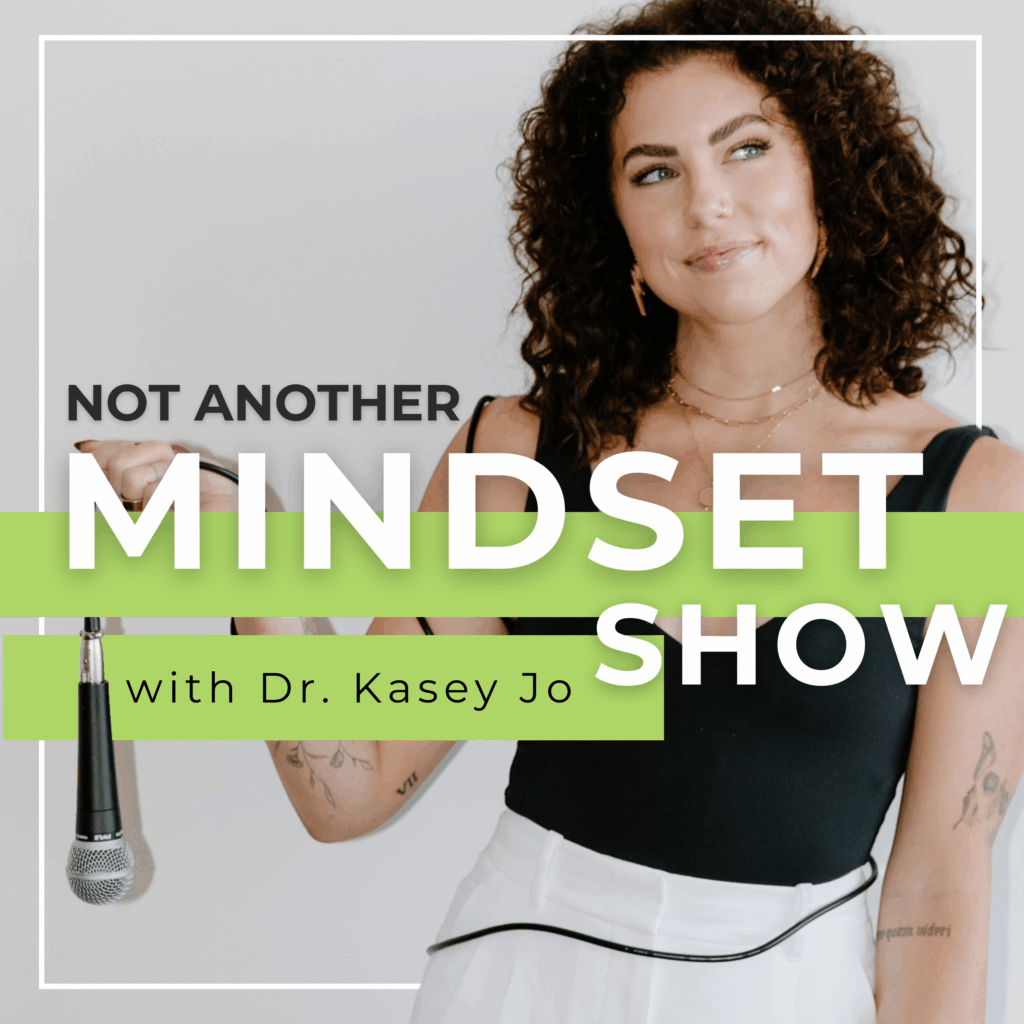

Why focusing on numbers alone often misses the real reason clients struggle to change.
While tracking macros and adjusting numbers can be useful, they don’t always address what’s actually driving client behavior. In this episode, I’m breaking down the difference between traditional macro coaching and mindset–focused coaching (and why understanding client psychology is often the missing piece when progress stalls).
In this episode, I explain how behavior change coaching goes deeper by understanding client psychology, beliefs, and behavior. You’ll learn how to leverage your client’s strengths instead of constantly trying to “fix” what’s wrong. By shifting your approach to mindset–focused coaching, you can help build confidence, consistency, and long-term results.
And if you want to strengthen your ability to coach behavior change at a deeper level, don’t forget to grab my 5 FREE lessons in behavior change and mindset. These lessons will help you better understand your clients’ psychology, support sustainable habits, and create results that actually last.
Episode Highlights
>>(1:07) Traditional vs. Behavior change coaching
>>(4:42) Application and intake forms
>>(7:19) Transform your forms
>>(9:01) Coaching relationships and methods
>>(17:13 ) Behavior change coaching techniques
>>(20:39) Coaching from a psychology perspective
Tune into the episode to understand when traditional coaching falls short and how a mindset-based approach can transform client progress.
Rate, review, and subscribe to my podcast.
If you enjoyed this episode, I’d be incredibly grateful if you could rate and review the show on your favorite platform. Your feedback helps me improve and allows others to discover the show. I want to hear from you whether you’re loving the insights or have suggestions on how I can make the show even better!
Simply scroll down to the review section on Apple Podcasts, Spotify, or wherever you listen, and leave your thoughts. Your support means the world to me and helps me continue to bring you more of the content you enjoy.
Links From the Podcast
Want me to answer your questions on my next Q&A episode? Drop your questions here!
More podcast episodes from Not Another Mindset Show
Health Mindset Coaching Certification Instagram
Getting started with the Health Mindset Coaching Certification (5 FREE lessons included!)
Transform Your Forms Workshop Series [ONLINE COURSE]
Episode’s Full Transcript
You will go so much further to be thinking that this is, Ooh, this is a challenge that I can arise to the occasion and try to tackle and see how I can ask a different question or I can do something differently or try to figure out what’s going on beneath the surface rather than, this person’s just not coachable.
I already gave them everything that they need, they need. It’s not my fault that they can’t do it. Hello my friends, and welcome back to not another Mindset show. I’m your host, Dr. Kasey Jo. My goal with this podcast is to take the science of mindset and behavior change and distill it down into actionable takeaways for you.
Together we’re gonna unpack research around motivations, self-sabotage, willpower, and so much more, and we’re going to take all of that and translate it into strategies you can immediately apply to your health fitness. Relationships, business, marketing clients, all of the things. But just to be clear, it’s not all serious and Sy around here, we’re gonna have a ton of fun too, and I’m so excited to share all of this with you.
Alright, let’s go ahead and get into the episode. Hello. Hello my friends. Welcome back and not another mindset show. We are comparing traditional macro coaches, honestly, traditional nutrition coaches, fitness coaches. This could really be applied to just like traditional coaching in any sense with.
Behavior change coaching. If you’re new to the podcast, if you’re new to the work that I do, I very much live in the behavior change coaching land, my entire background, my entire career, my entire everything. My identity is very much wrapped up in mindset psychology, and behavior change, and how you can use that in your coaching practices to see better, faster results with your clients, longer lasting results with your clients, and ultimately.
Clients who stick around with you longer, clients who give you raving reviews and send you back more clients, better business. So much goodness comes when you are coaching with these types of tools. And I got this idea for the podcast ’cause I was still seeing, I still am seeing. A lot of the more traditional type of coaching methods out there.
Some going to the extremes of if you’re not ready to work with me or if you’re not ready to stick with the plan, if you’re not a hundred percent motivated, then don’t bother applying. Um, very much the extreme end of things, which is so unfortunate because the majority of people out there, meaning the majority of prospective clients for you.
Are not fully motivated. They don’t really see how capable that they are. They don’t believe in themselves. They have self-limiting beliefs. So if you are alienating those people, you’re alienating, uh, most of the population that you could be working with. So having behavior change tools and having mindset tools and being able to speak to these people and support them in their motivation efforts is.
Crucial. It’s crucial, especially in this day and age. I, people are not, people are not looking for you to just hand them a nutrition plan and check in on them and make adjustments. They’re looking for lifestyle changes and behavior changes, and if you don’t know how to do that, then you’re, you’re kind of behind the ball at this point.
So. What I’ll say first is it’s not that you can’t be both. I’m not saying there are people who do macro coaching and nutrition coaching, and then there are people who do behavior changed coaching, and there is no InBetween. That’s not absolutely not true. In fact, with my coaching company that I had for many, many years, we did both.
We absolutely helped our clients set their macros and with their nutrition and set up their training programs and all of that, but with a very, very, very strong emphasis on. We’re going to talk about your behaviors and how to actually help you change and make that stick and make it last, and make this a thing that you’re not just starting over on Monday every single week, or losing the weight and then gaining it back and, and all of that jazz.
So with that said, when I started mapping out my notes for this podcast, I recognized that I wanted to start talking about coaching practices right away. But the truth is. This starts honestly even before where I’m gonna be starting here. It starts with your marketing and it starts with your content and your messaging and your conversations with people.
But we’re gonna say the starting point is your application form, and with traditional macro coaching, traditional nutrition coaching, and honestly, the way that things were done for so long and still are currently being done. When we’re looking at an application form for prospective clients, for new clients, the traditional thing that people usually think about, and I’m not saying that this is necessarily wrong, it’s just incomplete, is to set up an application form so that you can figure out, is this person a good fit for me?
Are they motivated? Can they stick to the plan? Are they really ready to do this? And. Again, not necessarily wrong ’cause it’s good to evaluate those things. However, you’re gonna have a lot of people who come to that application form and immediately just get scared and immediately think, well, I am not ready for this coaching if I’m supposed to already be so prepared to check in every single week and do everything according to plan.
From a behavior change coaching perspective, sure. We are looking at fit and we are looking to see if this, uh, where this person at is at, maybe in their readiness to change or what we talk about in the health mindset coaching certification. A lot is stages of change. Where they at, where they’re at. In which stage, how they’re feeling.
Um, how can I evaluate that person from that perspective? What do they need to work on from a mindset and behavior change perspective? What do those limiting beliefs look like? How can I help them feel more capable and more confident? In working with me. So we think so often that we as coaches need to be talking about how competent we are and how smart we are and all the things that we can do for them when the reality is you can be the smartest coach on the block, but if your clients or your perspective clients don’t feel like they can actually do it, that this is something that they are capable of doing, then it doesn’t matter how many skills strategies.
Specializations experience that you have. So really I think a piece that’s missing a lot when people are building out their application forms is not thinking from that type of perspective is essentially how can I already start to cultivate a growth mindset and this person before they. Even get on a call with me before we even start working together because we need them to believe in themselves just as much, if not more than they believe in you.
This is, um, a lot of what I talk about in a, it’s not just a, it is actually my most popular DIY. Like online digital product program, course, workshop, series, whatever you wanna call it called Transform your Forms, where I’m actually walking you through each step of this process from sales calls and application forms and intake forms and coaching and all of that, and how to really insert behavior change into your coaching practices.
I’ll make sure that that is linked and shared with you in the show notes of this episode. If you wanna dive in even deeper. But speaking of intake forms, so let’s say this person now signs on with you from a traditional coaching perspective, intake form. What are we looking at? Diet history, their experience with tracking macros, their nutrition knowledge, their goals.
Things that are still important. You know, I’m not saying do not include these things on your intake form there. It’s just again, incomplete. So from a behavior change perspective, other things we really need to be thinking about is again, their belief and their ability to change. I mean, this is really number one, you can give the most perfect plan for someone that really does like fit their lifestyle and all of the things.
But if they don’t believe that they can actually do it, and they have past history of not sticking to things and it not working out, then ultimately. Nothing’s going to work. So we need to be evaluating that at the beginning in our intake forms when we’re talking to our new clients so we can try our best to like get in front of that.
So you’re not with a client three to six months down the line. You’re like, why is nothing working? Everything that I tell them to do, they don’t, they can’t do. Or they say that they’re motivated, but it’s not happening. ’cause this might be what’s happening underneath. We also, from a behavior change perspective, wanna think about expectations and not just expectations for, you must check in by 5:00 PM every Tuesday, but expectations for the coaching relationship and also for themselves.
What are they actually expecting to get out of this? Because you would be surprised, and you may not be surprised ’cause you may have experienced this before, where the expectations that your new clients have for you are wildly different than what. You have in mind and you’re kind of wondering like, what made you think that this is how this was gonna go?
Or what made you think you were gonna lose weight that quickly? Or what made them think that is that you guys didn’t have a clear conversation about it and we’re so quick to say, why would this person think this? Or like that’s on them for having that type of expectation. But there’s a lot of expectations setting that needs to be happening in the beginning.
And your intake form could very well house a lot of that. Even asking them too, like what would make this a success? Not just the entirety of the coaching relationship and maybe within the first 30 days, like what would success look like to you? Because that can also help you pinpoint like, oh man, this person thought they were going to lose 30 pounds in the first 30 days.
Really glad we’re talking about this now. So they’re not really upset or feeling like they’re behind or thinking that this isn’t working for them. After that first month, really love to ask you about support systems and what their life looks like, and really trying to get to know that person outside of the coaching relationship because obviously that’s going to impact things.
It’s going to impact things from a behavior change level and from a progress level. And enjoyability, uh, literally everything. We can also use the intake forum to assess barriers and what I say boosters, I say barriers and boosters. So not just what’s going to get in the way, what things are gonna come up.
What do you think is going to be the thing that makes this the hardest for you, but also what strengths you already have. What do you think is going to support you the most during this? What is something that you have that I don’t know about you yet? Uh, that is really gonna help you be successful. So this is a really great way to start cultivating a growth mindset and pulling out those strengths and seeing those bright spots in this new person that you really don’t know anything about.
And I think that’s an important point to make too, because from a traditional coaching perspective, coaches really just think like I’ve, I’ve worked with so many people who have the same problems and are looking for the same outcomes. And so I know I’m the expert. I’ve done this so many times. I’ve been coaching for so many years, but you don’t know.
You don’t know this person and you don’t know what those barriers are. You don’t know what those boosters are. You don’t know what their life looks like, and they have so much information that’s going to help you be successful, make your life easier, and help that person see success quicker as well. Um, I also have mindset evaluation, so really just looking at asking them more questions around.
Really what we’re trying to do is like where, where are we at on the spectrum here? How much of a fixed mindset are we looking at? Growth mindset, but also in different areas, not just do you have a growth mindset or a fixed mindset? That’s a terrible question. Terrible question. Do not put that in your intake form, but instead really trying to pick out the language that they’re using.
Oh, I’ve never really been successful with anything before, or I don’t really think I’m the type of person to track macros. Those are all fixed mindset statements, so being able to note. Those in the intake form, whether you’re asking questions directly or you’re just like kind of reading between the lines, and then being able to dive into that with them deeper to better understand like, where did that come from?
Tell me more about that. Um, again, something that we go over very, he heavily inside the health mindset coaching certification and also just in a lot of my free content and resources that you can find, um, because it is, it is such an important like foundational point and thing that we need to pay attention to with new clients.
With old clients with. With everybody. Okay. I gotta take a quick pause here to talk to you about something very important. Your coaching forms, you know, like your application form. Check-in forms. Intake forms. You my friend, are probably missing out on a huge opportunity here because most coaches see these forms as nothing but information gatherers.
And I’m here to tell you they should be doing so much. More for you. Your coaching forms should be helping your clients shift their mindset and make behavior changes that actually last. And your forms really do have the power to do that. And I wanna show you exactly how inside my recently updated and upgraded DIY workshop miniseries transform your forms.
This DIY program is a short series of video trainings from me where you’ll learn exactly how to use the science of mindset and behavior change in your coaching forms. So yes, we’re talking application form, intake forms, check-in forms, and. We’ll even dive into your sales calls and exit surveys. This is the easiest, fastest, and most affordable way to start, including science backed strategies into your coaching practices.
So it’s no wonder transform your forms is actually my most popular DIY program. And now with these new updates, it’s even better than ever. Over 700 coaches have already picked up this workshop series. Check out the link in the show notes to learn more. So touched on application form. Intake form. Now let’s say that person is working with you and we’re talking about the coaching relationship.
And man, there’s so many different directions I could go here. And honestly, there’s so many podcast episodes that you could dive into with this too. Um, but really with traditional macro coaching or just traditional nutrition coaching, again, the biggest focus is on tracking. It’s on numbers and adjustments to those numbers.
When things aren’t working, we’re just giving more solutions and more ideas, and try this thing then, or let’s do it this way. Or you’re struggling here, why don’t you try it this way instead? So if their protein numbers are lacking, you’re sending them a PDF with high protein snacks. If they’re not hitting their water intake, you’re reminding them to get a reusable water bottle and leave it at their bedside and next to their desk, you know?
Um. And it’s just I, I will get into the behavior change side of things, but it’s largely unhelpful because if you don’t really know what’s going on with that person and why they’re not hitting their water, why the protein is harder for them to hit, just doling out solutions without better understanding, that person is not gonna get you very far.
For those of you who’ve been stuck in that cycle of like, I keep handing them solutions on a silver platter, and nothing is ever working, this is why. There’s more questions and more things to undercover beneath that, that is going to not help you give them a better solution. But together you guys will come up with a better solution or they even better, they will come up with the solution.
In traditional coaching, we’re always, you know, looking out for what’s going wrong, what needs to be fixed. If motivation is lacking, the conversation becomes. Well, you don’t really need motivation. It’s, it’s fleeting. You can’t rely on it. I’m not motivated all the time. You need to be disciplined, like those types of conversations are, I can’t do it for you.
You need to be motivated yourself. Okay. Let’s just, let’s just, let’s get into behavior change coaching and I’m not, Hmm, some of this is, I wanted to say. I’m not saying this is like inherently wrong and, and it has likely been possible for you that you have given your clients a solution to a problem and it worked for them, but then a lot of the time you’ve probably seen where this doesn’t work.
Right? So with focus on behavior change and using behavior change, coaching methods instead, our biggest focus instead of looking at weaknesses really should be zeroing in on those strengths. And I kind of talked about this with like the barriers and boosters conversation and. Picking up on language that your clients are using that showcases the beliefs that they have, and use that to inform different questions that you’re asking that and the direction that you’re going and you’re coaching, again, guiding clients to come up with solutions on their own and lead the coaching relationship.
Yes, you’re the expert on nutrition and fitness and all of this stuff, but you are not the expert on your client’s lives. How you can better sit on your hands. Before immediately providing those solutions, ask questions, try to kind of like be the researcher in this sense and think what other information can I get from this client in order to best support them versus what can I just tell them to do?
And if motivation is lacking, rather than just the classic conversation of, well, we shouldn’t rely on motivation all the time. I’m not motivated all the time to. Instead assess things like the ABCs, which I have a full episode on this, which I will definitely link in the show notes for you. Um, autonomy, belongingness, and competence.
These are basic psychological needs that we have as humans to stay motivated and we are also motivated to meet those needs. We are motivated to feel autonomous and competent and like we belong. So this can be like a quick assessment If a client is struggling to stay consistent and stay motivated, our.
They feeling autonomous in the coaching relationship? Do they feel like they actually belong? Do they really feel like this is something that they’re capable of doing? Do they feel competent? Um, that can be, again, a quick assessment. And if you’re a health mindset certified coach, then you know what to do once you notice that those things are lacking.
And I’ve kind of shared some things here, and again, there’s so much more in the podcast for you guys to see within other episodes, but definitely check out that one. Um. Also from a behavior change coaching perspective, we’re not immediately blaming the client. This is where I can get kind of worked up because so many coaches, and this is, is such like the traditional, it’s traditional coaching ways is, okay, I’m gonna give you this advice and then if you don’t follow it, then that’s on you honey.
And that is not effective coaching. It’s not good coaching anyway. Um. But instead to look at your own coaching methods. Okay? So if this person isn’t performing, if they’re not sticking to the plan, if they’re really struggling, what could I be doing differently? What could I be doing better? And it’s not to say that this isn’t a two way street type of relationship, right?
Like it absolutely is. But you’ll go so much further to be thinking. That this is, ooh, this is a challenge that I can arise to the occasion and try to tackle and see how I can ask a different question or I can do something differently or try to figure out what’s going on beneath the surface rather than, Hmm, this person’s just not coachable.
I already gave them everything that they need, they need, it’s not my fault that they can’t do it. Like I literally can’t even say those words without feeling gross. Um. Also from a motivation perspective, if you’re a behavior change informed coach, you’re thinking about the different types of motivation that are out there, rather than thinking, how do we help this person get more motivation, or they just need to be more motivated.
It’s, well, what type of motivation are we operating from? Because if this is all extrinsically motivated, this person is wanting to lose weight, get healthier, do all of these things for something or someone else. Then it’s no wonder they can’t stick with it. The closer we can get to intrinsic motivation and this coming from internal places, there are various types of motivation, and I have talked about this on the podcast before.
Intrinsic Motivation is at its purest form. Enjoying something. So I’m motivated to do it because I actually enjoy it. And for anything that you have that you enjoy, it probably doesn’t really feel like I have to be motivated to do it. It’s just you’re doing it because you like it, but that is intrinsic motivation.
How can we help clients get more of that? How can we help them tie their personal values and beliefs and identity? Into what they’re doing. Because if that’s there, then they’re going to be more motivated. So that’s how you’re, how you think like a behavior change coach when it comes to motivation. And that’s just like one tiny little piece of the behavior change coaching pie.
Um, there’s so many other aspects, you know, habit formation, stress, self-control, self-sabotage. Growth versus fixed mindset communications. I mean, so much stuff. Um, which you can learn all those things inside the health mindset coaching certification. Shameless plug. Um, without understanding client psychology, mindset, behavior change, it can be really easy to just write off clients as being uncoachable.
But the most successful coaches. Are the ones who lean in and try to uncover what’s going on underneath and what questions they can ask and really get into it with their clients and let their clients be in the driver’s seat rather than trying to lead and tell them what to do all of the time. And remember, again, I’m gonna say this, I said at the beginning, the people who are feeling unmotivated and struggle with consistency are the ones who need you the most.
And they’re the ones that you are going to have the most incredible transformations with. Hey, we all love to have some easy clients who you can just toss some macro numbers at and throw them a training plan, and they just stick to it and everything’s great, but there’s not actually a lot of fulfillment in that.
Think about the person who has a lot of weight to lose and really needs to change their lifestyle. And it’s really weighing on other aspects of their life, like work and productivity and their families because they aren’t feeling their best, um, don’t have enough energy, and they’re really, really struggling to stay motivated and change their behaviors even though they want to so badly.
If you can change that life, that that’s what we’re trying to do here, right? We’re not trying to just tell someone how many grams of carbs they need to eat and then they hit them again. Easy, easy money, but we’re trying to change lives out here and. In order to do that, you really need to understand behavior change, mindset, psychology, all of the things that I talk about on this podcast, and this is why I am so passionate about it.
Okay. All right. I, I think that’s all I have. Like I said, there’s, there’s so many different aspects of this that I could go into. I could pick it apart by like communication methods and talk about, again, like content creation and all of that stuff too, and just how you’re speaking to people. But I think those are kind of like some of the.
Bigger dial movers, and I’m gonna leave it at that. If there’s any other aspect of this that you would want me to break down, like talk more about communication methods or like I said, content creation or anything, please let me know. Because I’m here for you and I wanna talk about things that you want to hear about.
Okay? All right, my friends. That is all I have for you, and I will see you next week. And that’s a wrap for today’s episode of Not Another Mindset show. If you enjoy today’s episode, don’t forget to hit that subscribe. So you get notified of the next one because if you’re anything like me, if the episodes aren’t popping up for you automatically, you’ll keep forgetting to come back to the show even if you really, really enjoyed it.
So go ahead and hit that subscribe button and make it super easy for you. And of course, if you wanna see more episodes just like this one, I’d love for you to let me know by leaving a review. I know, I know it’s super annoying to do, but the few seconds that it takes. Means the world to me and also ensures that I can keep providing free education and value to you.
And just to sweeten the deal, I am going to be picking a random reviewer every single month to receive a free workshop or product from me if you’re looking for more free resources. Or just wanna connect, hang out, chat a little bit. Come find me on Instagram. I’m Coach Kasey, Jo over there. That is where I hang out the most in the land of social media.
Alright, my friends, that is all I have for you this time. I so appreciate you being here and love to see you prioritizing your growth. I’ll see you next time.