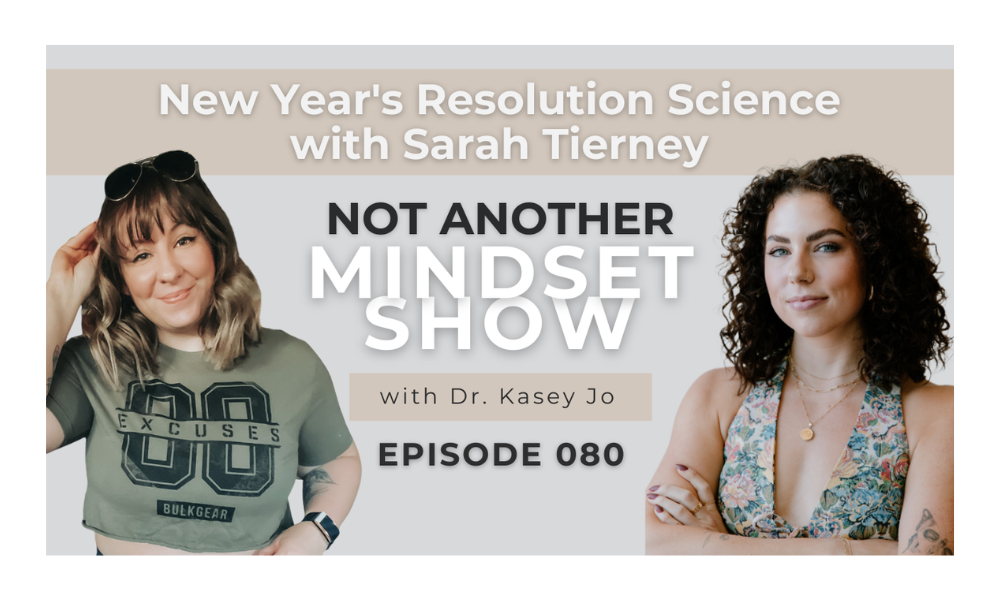
Why New Year’s resolutions tend to fail and the science behind successful goal setting.
In this episode, I’m joined by Sarah Tierney, my co-instructor inside The Health Mindset Coaching Certification, to break down the psychology behind New Year’s resolutions, motivation, and sustainable behavior change. Together, we explore why nearly 40% of people set resolutions each year, why so many struggle to stick with them, and what truly separates short-term motivation from lasting transformation.
We dive into the science behind the fresh start effect, the role of temporal landmarks, and how these moments can boost motivation, shift mindset, and help people reframe past setbacks. We also discuss how relying on timing alone isn’t enough, and what needs to be in place for progress to actually last.
Whether you love setting New Year’s resolutions or have completely sworn them off, this episode will help you approach goal-setting with more intention, self-awareness, and confidence. And of course, we share tangible, research-backed strategies you can use when coaching your clients so their goals don’t fade by February.
And if you want to strengthen your ability to coach long-term behavior change beyond the “New Year motivation spike,” don’t forget to grab my 5 FREE lessons in behavior change and mindset. These lessons will help you guide clients through setbacks, build consistency, and create results that last all year and not just the first few weeks!
Episode Highlights
>>(1:09) Sarah’s journey and role within HMCC
>>(4:36) Hard House Nutrition
>>(8:08) Do New Year’s resolutions actually work?
>>(18:07) The fresh start effect and temporal landmarks
>>(25:20) Self continuity
>>(28:02) Value of trying and changing
>>(30:52) Process over outcome
>>(32:19) Tools and strategies for goal success and goal clarity
>>(38.52) Obstacles and barriers
>>(44:48) Starting a new coaching relationship and setting clients up for long-term success
Tune into this episode and learn how to coach New Year’s goals in a way that actually leads to lasting change.
Rate, review, and subscribe to my podcast.
If you enjoyed this episode, I’d be incredibly grateful if you could rate and review the show on your favorite platform. Your feedback helps me improve and allows others to discover the show. I want to hear from you whether you’re loving the insights or have suggestions on how I can make the show even better!
Simply scroll down to the review section on Apple Podcasts, Spotify, or wherever you listen, and leave your thoughts. Your support means the world to me and helps me continue to bring you more of the content you enjoy.
Links From the Podcast
Want me to answer your questions on my next Q&A episode? Drop your questions here!
More podcast episodes from Not Another Mindset Show
Health Mindset Coaching Certification Instagram
Getting started with the Health Mindset Coaching Certification (5 FREE lessons included!)
Goal Clarity Worksheet [FREE DOWNLOAD]
Discipline vs. Motivation Episode
Mental Contrasting (WOOP Method) Episode
Episode’s Full Transcript
How do we just like set our clients up for success now so that when 2027 rolls around, it’s not even this like big change and like massive transformation. I wanna make Hello my friends and welcome back to not another mindset show. I’m your host, Dr. Kasey Jo. My goal with this podcast is to take.
Science of mindset and behavior change and distill it down into actionable takeaways for you. Together we’re gonna unpack research around motivations, self-sabotage, willpower, and so much more, and we’re going to take all of that and translate it into strategies you can immediately apply. To your health, fitness, relationships, business, marketing clients, all of the things.
But just to be clear, it’s not all serious and sciencey around here. We’re gonna have a ton of fun too, and I’m so excited to share all of this with you. All right, let’s go ahead and get into the episode. Okay. Hello my friends and welcome back to not another mindset show. This is a very different episode after what has been, it’s like a year and a half of solo episodes, totally by myself.
I actually have a guest, so I’m very excited to welcome. It’s, I was gonna say Sarah Michelle Tierney to like have your middle name in there too, as your Instagram handle. Well, I’m Kasey Jo. You have to be Sarah Michelle. That’s just like how it has to work. But Sarah and I have known each other now for five years.
Right. At least. At least Maybe six years. Maybe six years. Gosh, it’s, I was in your DM in 2019. Oh my goodness. That’s crazy to think about. And then Sarah was. In the very, very first cohort of the health Mindset coaching certification, and I definitely, um, pulled her in and had her drink the Kool-Aid of Mindset, behavior change and psychology.
And Sarah was one of those people who, we have like a handful of coaches every single time. In HMCC that are just so gung-ho about the material and are showing up to everything and answering questions and supporting other coaches. And Sarah was very much that person to the point where she was helping so much in our community group and like supporting me.
Like I would try to go into to the Facebook group to answer questions and be like, oh my God, here’s a Sarah girl again, answering questions before I even have a chance. To get to it. Um, and as Sarah will say that she kind of like created her own role at the Health Mindset Coaching certification. So now at this point I’m like, fast forward, you have five, six years.
Sarah is actually a co-instructor inside level two of the certification and is the program mentor in level one? So continues to support me and support her students run some application based calls that’s kind of like her. Let’s say like your main expertise inside the certification is really helping coaches take the science and apply it in real time.
So with that said, instead of again, just being a solo episode, Sarah, do you wanna share any more about yourself, your coaching business, what you do, why you wanna talk to me? Yeah. Well I think the one thing you forgot to mention was I’ve also been your mentee. Since you started Growth Collective, so you and I really got close after that with my.
We had like twice a month check-ins like we talked all of the time. And then of course I moved to Raleigh. You were here at that time. So we met in person and I re, I was actually thinking about this. We were at a coffee shop and I like literally take out a textbook, plop it on the table and you like.
You’re like, you would, so I think you just, you witnessing, and I would come to you with books and I’m like, look what I just got. And I’m over here. Like, I, I remember saying like, look at those Richard Ryan and Ed DC book I have. And you’re like, you would, so you are my type of nerd. Yeah. Yes. So that is that, that is literally me.
Like just took it, ran with it, and. I also got to find parts of HMCC that I really, really got interested in, like motivation and all that. So yeah, just connecting with you via the mentorship. You helped me build my own business. Like I attribute really all of that to the work that you and I did together.
Hard House wouldn’t be where it is. It’s not to say that I can’t do things, but you or the brain behind all of it, like you really helped me through so much. You helped me with hiring and like best practices for that and how, how to have hard conversations so. Yeah, I’m here because of you, so, so excited that I get to talk to you about anything.
Yay. And you’ve had, you’ve had hard house for how long now? At this point? Like when did, when did you say like, I’m gonna go full time into the health and fitness coaching space, build hard house nutrition. Like when was that? It was like. End of 2020, like literally two days before the new year. So Okay.
Let’s just go with January 21. So it’ll be our fifth anniversary end of this year. Wow. That, that’s crazy too. And I di, I guess I didn’t really realize how much it lined up that like when you dove full time into Hard House was also after just going through HMCC. Mm-hmm. Really like meeting me and then yeah, joining the Growth Collective, which is my business mentorship program.
Wow. That all kind of just like came together at the same time. You know what’s funny about that was in 2020 I was watching you build HMCC, like you were showing the behind the scenes uhhuh. And people on Instagram are like, Sarah, when are you gonna coach? I’m like, absolutely not. ’cause I don’t care about macros.
That’s the, I don’t wanna spend my life doing, you know, telling you where your macros are, but you kind of opened up a different world and it was the pandemic. So I was home from work. Like I wasn’t in, I was working outta school, and schools were closed, so, mm-hmm. Um, I was home and I went through HMC. I’m like, oh, wait a minute.
I, I, there’s a different way to coach. To coach, and this is the coach that I needed all along, so. I actually created Hard House to solve the problem I was seeing in the industry, and I knew from day one I needed to help other coaches be better because so many failed me. So it, it was, it actually makes a ton of sense now that I look back.
Ugh. I love it. I love it so much. And we hope that you guys, I was saying off air before we hit record. I was like, hopefully other people like to talk to us or listen, listen to us talk as much as we enjoy chatting with each other. And Sarah and I will have like. The longest voice memo conversations back and forth about life, but then also about these literal topics that we are teaching and talking to coaches about all of the time.
So it really just makes sense to have Sarah here, and there’s been so many times, and this is when I approach Sarah with this idea so many times that. I’ve been outlining podcasts and thinking, man, this would be a really good conversation to have with Sarah, or specific topics that I definitely wanna get into Sarah with in the future.
Things like body image, like I say all the time that Sarah knows far more about body image from a behavior change and psychological perspective than I do. So it’s, so it’s actually what she’s teaching inside level two of the certification. We already had, um, a couple ideas for. Based on the episode we have for you guys today, what we might get into next.
But yeah, definitely let us know how you like hearing not just my voice for once and if this is something that you enjoy. The more like kind of conversational style. I think that’s, that’s not, I think I know that’s what most podcasts are, so kind of bringing a little bit more of that to not another mindset show with.
The literally the one person that I want to be able to chat with more, because also with my podcast, the goal was for it to be solo episodes always pretty much forever because I’m a guest on so many shows all the time. I’ve been a guest on, I think at this point, over 120 shows over the years. So it’s one of those things where.
I don’t really want to just bring more people on and have those conversations. I would rather it be, here’s how, here’s the things I wanna talk about. But what’s great is that Sarah and I wanna talk about the same thing so we can all keep it in the same area. And today, as you’re listening to this, well, when this episode is getting aired, it is the first Monday of 2026, and when we talk behavior change and mindset and psychology and coaching practices and goal setting, it’s hard to ignore.
New Year’s resolutions. That is something that people are frequently talking about around this time of year, having that reset going into a new year and what is not talked about frequently, is any of the science behind it? And do new Year’s resolutions actually work? Are they worth actually setting? So we’re gonna get into that today.
And the first thing, I actually wanted to kind of like lay. Groundwork Foundation for this episode. Just kind of talking about the prevalence of New Year’s resolutions and how often we’re still seeing people talk about it. And I think it’s tough too and like maybe, maybe Sarah, you’re not the best person to, to be talking to this about, ’cause we live in kind of this.
Name bubble in social media land and like who we speak to and who we follow and things like that. Um, which can obviously make a difference. Like, I don’t know what it looks like on Instagram for like random Sally walking down the street, like how much she’s getting bombarded or not with New Year’s resolution type of material.
But I’m curious, Sarah, what you think, like how often is this something that people are still like pushing or talking about or. Uh, I guess vice versa, like not really talking about it anymore because there is some, like, hate towards setting resolutions too. Mm-hmm. I, I’m in a bubble. I think what I was seeing last year was content.
Like you, you don’t, it was like soft, have a soft girl winter or a soft girl. 2025 was like the vibe I was picking up on, but that was probably my algorithm. Um, the conversation around, you don’t have to do more, you’re, you’re great just as you are. Like that type of stuff. So. I think it’s the people who I think of like Facebook group land where there’s posting like New Year’s resolutions.
I also think CrossFits probably. A, a, what do you call it? An, uh, a sector of the fitness industry that probably capitalizes on that. Maybe whole thirties, another one, things like that. So, I don’t know, I don’t know if that’s a good answer, but that’s what I see. Yeah. Yeah. And that’s, and it’s interesting too to think about like the different sectors of the fitness industry and how certain sectors may like be promoting any piece of information more than another.
You know, like obviously yeah, we’re talking about Whole 30 or any like quick diet type of trend. Probably capitalizing on this stuff, right? Because they know people are thinking about wanting to start fresh in the new year and, and there’s like, there’s actually some good reasoning behind doing that. But then the problem is we have a lot of these other companies, like the billion dollar diet industry, preying on people wanting to do those things, which is an interesting piece of that.
Um, but yeah, for me, I, I kind of feel like it’s, it’s. This spectrum of on one side, people are talking about New Year’s resolutions in a way that is like empowering and oh my gosh, you can set new goals and have a new year and this is your, your fresh start, like all of this stuff. And then on the other side it’s why are you setting New Year’s resolutions?
Nobody can actually stick to them. You should be able to set goals any time of the year. And like honestly, just like hating on the idea to the point too where, to me, I feel like. People get into this place of, if I set a New Year’s resolution, like I’m not gonna tell anyone about, I don’t wanna talk about it because it’s like people know that they don’t actually stick to them.
So if I’m like setting a New Year’s resolution, then like, why have I not already done it? You know, like a little bit of that conversation too. But again, maybe that’s just like my own perspective and like things that I’ve picked up on, but it’s like. Other conversation is how your like social media algorithms and the people that you’re around and the information that’s right in front of you can be so different than what’s right in front of someone else.
And how that just like fully shapes your reality too. Mm-hmm. You know what word came up when you were saying that was contrarian? I think people try to. Coaches especially try to be contrarian because that’s what sticks it. People are like, whoa, let me stop. We were just talking about this, weren’t we?
Mm-hmm. Yeah. I feel like if you remember that conversation, what did you say to that? ’cause that was good. Yeah. Yeah. I think it’s, um, yeah, that was in the WhatsApp chat for the level two students. Yeah. We were talking about how. Often it, okay. It’s easy to follow someone’s message and be like, wait, what’s going on?
This person is talking about it in this way, and I’ve heard it in this way before. And then I came to the chat and was like, here’s the thing though, that is actually just like a classic marketing tactic, really, is to pick one side and speak to it differently than maybe it’s been spoken about before. And to be honest, like some of the stuff we’re gonna talk about today regarding New Year’s resolutions.
Is that like we’re gonna talk about it in a different way than how people normally hear it. So yeah, and I think that’s, that’s probably what fuels a lot of those like that, the two different sides of the conversation. But we see it with everything, right? Someone saying like, no, you should never track macros because it’s going to lead to disordered eating.
And then other people saying, no, this is like a really simple tool that’s going to allow you to have more awareness about what you’re putting in your body and blah, blah, blah. So yeah, I do, I do think. The conversation is still out there. People are on two different sides, basically. Like I don’t really hear anyone in the middle being like, if you wanna set them, you, you should because of these reasons.
But if you don’t, then like that’s okay too. And like there isn’t really anyone doing that, but like, to your point for being contrarian, right? Yeah. It’s not gonna get a lot of reach, so we don’t Right. So we don’t, so we don’t. Okay. So I do have some stats I’m gonna read off here. Just generally since there is so much of just random percentages thrown around everywhere, like only 2% of people stick to the resolutions and you someone else saying 50% of people do and whatever.
So what I have here, so this is according to a survey conducted by the American Psychological Association. And they found that about 40% of Americans make New Year’s resolutions each year. And this number has been consistent over the years. So about 40% of people are doing this whether like we like it or not.
Right. So, and I think that that piece is important too for coaches to understand that even if. Their belief systems are, oh, you don’t need to set a resolution. You can, like, we don’t need to call it that. We don’t, whatever, that 40% of people out there are still doing it. And that includes like your perspective clients.
So there’s that one. Do you have any, any words on that piece? I, I actually did, but we’re we’re, I will yap in a different direction. You keep going. Okay. I’ll, I’ll go through all my stats and then we can yap in that direction. Okay. So. Success rates when it comes to New Year’s resolutions. Research indicates that around eight to 20% of people are successful in achieving their resolutions.
This is a study published in the Journal of Clinical Psychology, found that while 77% of people maintain their resolutions for at least a week, 77% for a week, only about 19% are successful after two years. So I think that also brings. As there always is nuance to the conversation when we’re looking at this like, oh, people just don’t stick to them.
Well, actually 77% stick to it for the first week, and then if we’re looking at 19% over the next two years, and like, we’ll get into this, but I’m just like, okay, why are we not setting resolutions if 19% of people are still sticking with them after two years? To me, I’m like, that’s a pretty solid percentage as far as like I set a goal and I stuck with it.
We don’t wanna just ignore the fact that 20% of people are successful. Right. Yeah. Um, okay. Last thing I have here is research from the University of Scranton suggests that while many people abandon their resolutions by mid-February, those who are able to maintain their commitment often report higher levels of satisfaction and wellbeing.
So there’s another component to this too, where. Setting goals, working towards them, seeing success, seeing progress actually just benefits your life in general. So if we were to say, no, don’t ever set a resolution or set goals or whatever, you’re actually missing out on that being an opportunity for you to just like feeling better about your life.
Um, okay. So, yeah, that’s, that’s what I have for you guys on just like general stats and where we’re at. But Sarah, what is, what is the direction you wanted to Yap in? Well, I’m gonna go with what you were just saying. Yeah. And finish your thoughts. I knew you were like getting, there was, what do the 19% have in common?
Like, I wanna learn from those people. What’s, what’s working for them? Why were they able to stick with it? What did they, yeah. What do you do you have that, is that in our notes here? Um, I mean there’s definitely, I mean, pieces that we can get into and why. Some people may be successful versus not. And that’s also like it’s, we’re talking about New Year’s resolutions, but it’s kind of like what you and I are talking about all of the time, just like what makes people more likely to stick to a behavior long term.
Like that is everything that HMCC is built off of. That’s like 90% of the content that you and I are posting. Um, so it kind of all comes back into it. Which then kind of brings me to another question of, is there really a difference between goal setting? And New Year’s resolution. Right. And that’s a, that’s something that I’ve brought up before on Instagram and on the podcast, just generally thinking about how people out there who are maybe bashing resolution setting are.
Other times of the year talking about goal setting. So what is, what is the difference? Is there a difference? I think obviously kind of like, probably depends on the person and like what they think, but I don’t know what comes up for you actually. I think that’s it, right? It depends on what resonates with the, the person, what they wanna call it.
I also think, how many times do we. Get ready for summer goal. Like, and that all has a part to play too, right? With mm-hmm. I mean, you’re, you haven’t gone into it yet, but like the fresh art effect and the temporal landmarks, like, they’re all very similar. So is that what we have next? ’cause we can just go, yeah.
Yeah. I think it makes sense to like roll it into that for sure. Yeah. And how. Really sure we can, we can play to that argument of you can set a goal at any time of the year. Why does it have to be the beginning of the year? And it, it doesn’t have to, but there is some power to having what researchers will call a temporal landmark, like a significant.
Time period for you to start something and how that actually does help you stick with it. Does that have to be the first of a new year? No, it could be your birthday. It could be September 1st. It could be the start of a new quarter there and like we are all kind of doing this already anyway, especially when if we’re talking like business and setting goals for the quarter for the year or for the last half of the year or something like that.
Or we’re doing it and there is actually some. Scientific support to having a meaningful time where you are setting a goal and then that kicks off something called the fresh start effect, where having this kind of like clean slate is helpful for you to see like, okay, that was my, my past self and now from here going forward is this new version of me new like.
Fresh start, clean slate. That does, again, help you actually stick to things. So yeah. Any thoughts on that piece before we get into more details? Yeah. Well, I would say, my thought is like, okay, what, what makes that new version of you that your brain thinks that you are about to embark on? Like what? What is the mechanism driving that?
And from what I. Can remember is it’s like self-efficacy goes up and self-efficacy is a big predictor of whether we keep persisting or not, so mm-hmm. Um, we can lean into that and take advantage of that momentum if a client is feeling. Feeling that way. So that’s where my brain went with self-efficacy.
Did you have another thought in mind about what makes Fresh Start so powerful? Yeah. And you used the word momentum and like picking up on that. Right? And so I think that there is an important conversation here around coaches who maybe don’t wanna touch the New Year’s resolution stuff. Or like, oh, you don’t really like need to do it.
Now you have, again, remember. 40% of people are doing it anyway. And as a coach, you should be really looking for these time periods that are important to your clients because we know that if we are starting something new, having this fresh start effect, having this temporal landmark of like, okay, today’s the day that I’m gonna like do whatever, that there is more.
Motivation to do it and to be able to pick up on that motivation. Momentum as a coach can be really, really powerful. So instead of just ignoring that and or really going the opposite direction, it’s actually something that you could pick up and leverage. You know what came to mind for me when you were saying that was.
Coaches will say all the time, you don’t need to be motivated to do it. You can still do it when the motivation ebbs and flows, but as soon as you have a client that’s motivated, you’re like, but not that kind, not that kind of motivation. So, oh my gosh, that’s so true. Yeah. Yeah. That, that one I don’t want though, you know, any, any other kind of motivation, wherever else you’re getting it from.
That’s fine. Um, I have a couple points here, just kind of again, going back to. Science research around temporal landmarks, the fresh start effect, and the first piece is cognitive structuring. So when I say cognitive structuring, we’re talking about how temporal landmarks themselves, these like specific meaningful places in time for people.
And it could be different depending on the person, but pretty much everyone comes together at the beginning of the year, right? Um, and how these landmarks actually create a cognitive structure, meaning that. We have this like place in time, we can kind of like separate 2025 from 2026 and it gives us this mental structure to go off of where we actually feel like we maybe have a little bit more of like sense of control over what’s gonna happen next.
Um, we maybe. More likely to evaluate what happened in the past and what’s going forward. And these are all really important things in the goal setting process. And then behavior change process. You know, if we talk about like mental contrasting and that kind of tool, which I’ve talked about in previous episodes, we don’t necessarily need to get into now, but essentially looking at, okay, what are the obstacles that are gonna come up?
How do I plan for those things? And that being a big part of it. So temporal landmarks with this like cognitive restructuring piece to it. Is kind of baking that in naturally by saying, okay, to today is the start of a new year. What did I do in the last year? What do I wanna do this year? What kind of goals do I wanna set with myself?
And that can be really helpful to have that sort of structure and be able to say, that was passed and this is like future going forward. And that can really support people in their behavior change. Momentum. Yeah. Even from a business perspective, we can, I really like using words of the year we’ve done that.
And I think even in some of your vision boarding workshops mm-hmm. Words of the year, um, the, the way that I articulate temporal landmarks is we kind of look at our life in chapters, right? Like mm-hmm. If you were to tell me something that you did junior year, you’re not gonna tell me. Yeah. 2000. When were you a junior?
2010. Do I know? Yeah. No, actually that was, that’s correct. I know you, I know you, but you’re not gonna be like, oh yeah, in 2010 you’re gonna be like, no, junior year this, this happened. Yeah. Right. Um, looking at our lives, so I actually have a few clients who are in this transition of like post-divorce. So they’re like, there was marry to me and now divorce me.
And so the, the temporal landmarks thinking about life in chapters in 2026 can be. A chapter, it can be a word of the year, you know, and even with, um, culturally we can respect that too. I have some, um, clients who observe like the, the Chinese New Year and whether it’s the Year of the dragon or whatever.
So like there’s a lot we could play with it that could be fun and effective and lead our clients in a. Good direction. Yeah, and that’s, that’s interesting too ’cause we, we do set up these landmarks of time and have these chapters of our lives, whether it is like a year or it is like post-divorce, you know, that kind of thing.
So we’re already doing this anyway. And to then. Say like, oh, well if you’re, you’re doing that intentionally, let’s say, it’s not necessarily New Year’s resolutions, but okay, by September 13th I’m gonna start doing whatever. That’s just us being more intentional with setting up those landmarks, but we’re already doing it anyway.
Um. But I think like the important piece like tying this all back together is that we know that research supports starting something from a meaningful time for you. And yeah, there, I don’t think there’s anyone who’s like, oh, the start of a New Year’s not meaningful. Right? So, yeah, can be really helpful for those reasons.
The other piece is. Self Conti. So how we see ourselves over time and with a temporal landmark that we’re saying, you know, starting the 1st of January that can help people separate their, again, kind of going back to what I was saying before, but separate their past from what’s happening in the future, but not necessarily.
The past and the future, but the past failures that I had and setbacks and all of that, relieving that behind this temporal landmark. And now going forward, I’m looking at my future potential and not necessarily thinking. Okay. Those past failure setbacks, things that didn’t work for me, those are no longer impacting me.
’cause now I’m going forward with my potential. So I think that can be really helpful and thinking it kind of can tie back into like identity and growth versus fixed mindset. How people, our clients, ourselves. Are often tying themselves to past failures, things that didn’t go well, and if you can just say, Nope, we’re, we’re cutting it there, and we’re just moving forward with this fresh start, this clean slate, how that can really just, yeah, create so much more confidence in your abilities and competencies and all of that too.
So yeah, thoughts on self continuity and how that kind of gets broken up. I just thought that was like, if you want to know how to help your clients persist with that long term. Mm-hmm. Obviously the podcast, obviously HMCC plugging in there to like learn the actual like communication and behavior change skills, because this is not out of our hands like.
We, there’s a lot of, we have a lot of power as coaches. People have a lot of power in themselves to take advantage of this, so. Mm-hmm. Yeah. Yeah. And to me, I’m just like, this is, it’s just all opportunities. You know? I hear all of this stuff and I’m like, this is. I, yeah, this is where you’re gonna hear like my perspective on New Year’s resolutions, but I just, I don’t see why not.
Like I don’t see why not, and I know there’s like the pessimistic side of it where, okay, I said 20% of people stick with it after a couple years, so that means that 80% of people aren’t so, but just because 80% of people aren’t according to this. Statistic. Like it’s very fixed mindset to say, well that means I’m just not gonna do it.
’cause the chances are so low and instead seeing, okay, well there’s 20% that are, so how can I be part of that 20%? Right? Like, what does that look like? And as a coach, it should become, how do I ensure that all of my clients are part of that 20%? Um, yeah. Anything else on that? Yeah, go ahead. Um, I think something we also need to just appreciate about goals in general.
’cause that’s, this is just a version of a goal, right? Goals can also change and adjust as you learn more, as you live life. As life has its own transitions, it is also okay that New Year’s resolutions aren’t successful to most people, right? Like we, we do that with regular goals. The idea though is okay, if you have someone, and of course I’m going to book talk ’cause that’s me.
But if you have someone who’s like, I’m gonna read a hundred books a year, but they only read 50. But they read 50 too. So that’s where I think we also just gotta have a general appreciation for trying and changing. And it’s not just a success if you achieve it, there’s, there’s so much potential in there.
So yeah, opportunity, 100%. Yeah. Yeah, so even it’s like the, I say this all the time when we’re talking in the Growth Collective and stuff with goal setting, but the whole shoot for the moon, and you’ll still land amongst the stars type situation. So even if you don’t stick with your resolution for years on end.
And you stick with it for six months, like what are, what are you getting outta that six months? Like probably plenty still, right? Um, and to your point, maybe a lot of those people who are in the 80% who didn’t stick with it for years just because their goals changed or they already got what they needed out of it and learned the things that they needed to learn and that allowed them to adjust and do something different.
So we don’t actually like know the full story either. Like, I don’t like robbing people of needing to figure it out, even if it’s messy and they’re not successful. Like actually it’s, it’s funny because a lot of coaches really struggle with their own emotional regulation around this. ’cause they’re like, my clients have to be successful.
They’re not successful then I’m not successful. And it’s like, but if you understand how behavior change works and how humans are like, it is messy and chaotic and. Okay. If a client sets a New Year’s social revolution, I know we ideally wanna help them be successful with it, but if they’re not, that’s all part of their story and journey.
It’s all going through, like it’s so useful. All of our mistakes and all of our successes are useful information regardless. So yeah. Yeah, it sort of brings up like the conversations just generally about setting goals, but not for the sake of always hitting the goal. I know that sounds weird to say, but I, and I actually brought this up, I think with the growth collective recently that I don’t remember the last time I set a goal that I actually hit.
So, and that’s like from a, from a business perspective, right. So, and I, it’s my, definitely my perspective that if you are. Consistently setting goals that you’re consistently hitting, then you’re not actually setting big enough goals. So that kind of like bakes itself into this conversation about New Year’s resolutions and actually sticking with them.
And maybe it’s okay if you don’t actually stick with it forever. Like maybe that’s. That’s just as important is to go through the, the trial and error of trying to stick with it and learning things and like, what are you gonna pick up from that? And yeah. I can’t tell you the number of things that I have gone after.
Maybe didn’t get it exactly, but the stuff that I got in the process was just as important, if not more so. Yeah. Yeah. The process is important, and don’t worry, we’re gonna talk about how to be successful. Like we’re not, like it’s both opportunity. It’s also like, it’s okay if you fail, but also we will help you try to be successful too.
So, yes, exactly. Exactly. And then, yeah. Um. I had written down to just like general implications and recognizing that although there is so much benefit to having a meaningful time to start your goals and that actually making you more likely to be successful and having this like fresh start, clean slate, I’m like hitting the reset button and I have so much more belief in myself now because we’re leaving the past.
In the past. All of that is important. But so much of what Sarah and I talk about, and that’s what this entire podcast is filled with, is what are specific tools and strategies and things to actually help you see success long term with your clients, with yourself from a mindset, behavior change, psychology perspective.
So I don’t, Sarah, whatever direction you wanna go next with this. I’m kind of thinking, yeah. Are there specific like tangible tools that we can give if like a couple things are coming to mind? HMCC type concept strategies, things that you’ve done with your clients to like help set them up for success with whether it’s a resolution, a goal, a long-term behavior change, whatever, we can kind of go that direction.
Well, the first thing that comes to mind is values, like core values being the guiding star for behaviors, for goal setting. I mean. Uh, yeah, that, and we have, we actually have a tool like that, right? Your values and priorities, and that could also feed into that other goal one that you have, the one from alumni.
Do you remember what I’m talking about? Mm, yeah. Goal clarity. Goal clarity. Yeah. And I actually have that. I can put that in the show notes for you guys. You can go download it and check it out. It’s, it’s literally a worksheet that you can hand to your clients or do with yourself. There’s even like, have like a math equation in there for you to like add up like certain numbers to tell you like how you can get more clear on your goals.
So. Yeah, definitely. Mm-hmm. And, uh, core values will lead into, can help facilitate motivation, help sustain motivation, and it could also highlight, um, once you start getting into the work of core values, then my brain goes, okay, what characteristics. Does a person who values health, what personal characteristics do they embody or build?
And then you could start going over with your clients, what strengths they have. What maybe, I don’t know if weaknesses is the right word, but like what weaknesses do they have that they maybe could use some building up on? Like, it really just shows a lot of what you can, what kind of work you can do with your, with, with your clients.
What comes up to mind for you? When I say that? Um, I’m thinking. Honestly, just how many coaches who do lead into goal setting New Year’s resolutions, whatever, and are listening to me going, yeah. Yeah, Kasey, I get it. Like I know, I know that this is important and I hear you and I understand that there’s like even research to support doing this, but also.
Then they go to their clients and they hear their clients out. This is the resolution I wanna set. This is the goal I wanna set. This is the thing I wanna do. And the coach just says, okay, let’s do it. And instead of what you’re talking about here of going, let’s talk about how your personal values and priorities.
Attach to this goal, this resolution. How do the barriers and like assets in your life? I’m using barriers and assets as like level two language. Um, how do those things play a role in this goal? Like, what’s gonna keep you from doing that? What things do you already have at your disposal that are gonna help you be successful with this?
So it’s kind of like. It’s one thing to help a client set a goal, it’s another thing to help them get very, very clear and specific on what that goal is. The things that support them and don’t support them. How their values and like life priorities play a role in supporting them or not supporting them with that thing and attaching it.
Because we do know from motivation science that. The more you can attach your personal values and the things that you want out of your life, really to said behavior that you’re trying to do, the more likely you are to do it. So yeah, I’m just like for, for all the coaches out there listening, it’s really truly not enough to just say, what’s your goal and your client.
Tells you, and then you just kind of carry on. Like there needs to be more conversation underneath that, and that’s where it’s like you’re, you’re really setting it up to last longer and potentially be part of that 20% people, coaches will build check-ins around that too, right? So I. Jane comes in with her goal.
You’re like, okay, great. Let’s set up the macros. Let’s set up the check-in. Questions like, how did you do? What wins did you have? Tell me something positive about your life. But if they’re feeling yucky about it or if it’s not working, the self-regulation piece isn’t there. It’s our job. We have to identify either what skillsets they’re missing or what mindset issues are getting in the way.
That’s our whole job is the self, like they come with the motivation. We can guide them in doing goal setting very well, but it’s our job to help them with that self-regulation. Self-regulation piece in the middle of it. Right. And fortunately, that’s what the show and HMCC helps coaches with that skillset of helping their clients with that skillset.
Right? Because the very unfortunate piece is that coaches don’t get equipped with any of this. They get equipped with the nutrition and the exercise and carbohydrate utilization and, and all of that hypertrophy. Training programs, but not necessarily like, okay, well my client wants to set this resolution.
How do I actually set them up for success and help them see long-term behavior change? And yeah, that’s where all of this other stuff comes in. Trying to think if there’s like anything else, let’s say. Let’s say a coach who is listening has a handful of new clients because it is the beginning of the year and these people are like gung-ho and ready to get started and change their lives.
So they have a handful of current clients that they’ve already been working with that really wanna like set some resolutions. Or maybe these coaches want to like run a, like vision board, like goal setting, resolution planning workshop with their clients, which like, great idea, you guys should do that. Um, like what?
Do they need to include? Like what’s going to make it more powerful compared to, okay, everyone just get on the call or write down your resolution for the year. You know, like what we talked about, values and priorities and getting really clear on your goals. Is there anything else that would be like beneficial from a behavior change perspective?
They’ll need to listen to the mental contrasting episode because. Like all think of all the good stuff that can happen if you achieve your goal is great. But I always say this, I’m like, what’s gonna happen on January 19th? On a Thursday afternoon? It’s cold out. You just got a snowstorm if you’re in the north.
Like what do you do on those days? How does your client continue to keep going or at the very least, be prepared to recover from a setback. Mm-hmm. And all of that I think should be done when you’re planning the goal. I, I share, I teach on this in level two, which is, I’m like, your preparations need to be good enough if it’s a New Year’s resolution, and this is gonna be kind of like a, a sustaining thing long term.
Your preparations need to be good enough and we need to help clients. Prepare for obstacles and barriers that come up. We need to normalize them too. Like, Hey, there’s gonna be some setbacks, maybe some ambiguous times where you’re feeling ambivalent or confused, or you are questioning yourself. All of those are normal.
Needing to recommit to the goal again and again as normal. We do this as coaches and as business owners. How many times do we think about leaving and then we’re like, we could never leave, and so we keep going, like just normalizing that and then. But also not over normalizing it. You talk about this a lot, Kasey, to be like, we don’t wanna over normalize that all these bad things can happen.
We wanna prepare them, but also not have them leaving feeling like their success is fragile, like mm-hmm. They can strengthen the resolve and you guys can do the skill building and mindset changing altogether. So that’s my, yeah. Yeah, all really important things that like brings up too. I did a little mini podcast episode for our mutual friend Karin on her like Fly on the wall newsletter, and the question that I had to answer for her to send out was, how do I build a growth mindset when growing my business?
And one thing that I spoke to was very similar to what you just said, that we should expect difficulty. Challenge, but we shouldn’t expect failure. So there’s a difference there. Like I should expect business to be hard. Starting a new health and fitness program should expect that to be difficult and challenging sometimes, but I’m not going to expect that I am not going to be able to do it, that I’m going to fail altogether.
If you’re expecting to fail, then you’re sitting in growth mindset world for sure. Just like having that thought in the back of your mind that. Well, I’m not actually gonna be able to be successful with this. I’m not actually gonna stick to it, which is actually very perfect for the conversation around New Year’s resolutions too, if you’re setting a resolution.
And already have like all these stats in your brain while only 80% of people after a few years are even sticking to it. Now you’re going into it already believing that you’re not gonna be able to do it, and like what do you think that actually ends up doing for the actions and the decisions and all of the things that you have to do during that time?
Or when things get hard, you just go, I knew it was gonna get hard. I knew I couldn’t do it. I knew I wasn’t cut out for this. So it’s really, really important to expect things to be difficult, but expect yourself to work through those difficulties rather than expecting yourself to not. Mm-hmm. And be careful with what you say on social media too, right?
If you’re a coach saying New’s resolutions are terrible idea, you could be setting up pro prospective clients or just your audience to be like. It doesn’t work. See, and then they go and start telling their friends, you shouldn’t do that New Year’s resolution. Like it’s, it’s a ripple effect too. Mm-hmm. So it’s like how do we help be people, be successful?
And honestly like research shows us how. It’s not a, it’s not a question mark. Right. Right. You don’t actually have to guess. Right. And, and step one is, don’t encourage people that they won’t be successful. Like that’s, I think that’s like the, the crux of like, why I’ve even bothered by like people like going, having hate towards New Year’s resolutions because of that piece.
Like that’s the biggest piece. Number one. Yes, we’ve already talked about all the reasons why it could actually help you be more successful, but number two. Ha. Having that opposite message of you’re not actually going to stick it out anyway, and most people aren’t successful. All you’re doing is cultivating a fixed mindset in Yeah.
Your perspective clients, like in your audience on social media. Which means you are pushing away applications by doing that. Because if they’re hearing you go, oh, new Year’s resolutions don’t never work, but I was gonna set this resolution to get in the gym and eat healthier and lose weight this year.
And if you, the coach or the one who’s providing a service to help them do those things, but now they’re reading your content and going, well, people aren’t successful at doing these things like you’re. Don’t realize it’s like the opposite type of sales strategy you would ever want to do, but coaches aren’t thinking that way, right?
Mm-hmm. That’s why they have us. Yeah, exactly. And that’s why we are on this podcast right now. Um, so please keep doing what you’re doing because No, please don’t actually. Um, okay. Last thing that I have for us that we kind of chatted about off air that we wanted to touch on is like, literally how do we even get back?
How do we get to the point where. Next year at this time, we don’t even need to have this conversation about how do you support your clients with their resolutions because your clients are already successful as is, and they’re not really seeing like, oh, 2026 is this new time, new me, new era, new all of this stuff.
Because they’re all, they’ve already. Set stuff in place. And that doesn’t mean they might not have different goals or like little things that they wanna set for themselves in a new year. But yeah, how do we, how do we just like set our clients up for success now so that when 2027 rolls around, it’s not even this like big.
Change and like massive transformation I wanna make. Well, okay, you’re not gonna like my answer because I’m gonna be like, you have a whole certification that teaches people how to do it. So like, can I need, I need, I need a tunnel. Like gimme a tunnel vision to go down so I can, I swear to bring Sarah on here just to sell the certification, I promise.
Yeah. But it, but it is true because yeah, it’s. It can be easy for me to, for me answer to just say, well, we have a 12, 12 week program and then a whole like five to six month apprenticeship after that where we can teach you all these things. But we do wanna like leave you with some stuff, which I hope we already did a little bit already.
Um, but yeah, like what do we, uh. Okay. How about this? Here’s a question for you. What do you talk to your clients about at the beginning of the year or maybe even at the start of a coaching relationship? ’cause we could call that a temporal landmark too, that they’re starting something new and like the start of my coaching with Sarah or any of the coaches at Hard House, like what are you working with them on?
Like out the gates to say like, this is something that we’re just gonna keep building off of instead of like stopping and restarting and stopping and restarting, which is. The habit and behavior that a lot of people get into with the start of every year, it’s like they’re setting the same goals that they never actually hit the year before.
Okay. I’m gonna try my best to answer this. Go whatever direction you wanna go. I, I’m gonna try, it’s, I’m thinking of a very specific person right now who’s like, I wanna stop the poor eating cycle. But I also noticed in our intake form there was some language, like good food, bad food, and so it is being trained to know how to spot that kind of information and knowing how to work with it and how to talk to clients, first of all, needing to.
And I guess talk to them and understand their willingness to even have those conversations with you. Because some people may not be ready to be like, what do you mean there’s no like, bad food? So we gotta kind of like assess their baseline, where their starting point is. And then, gosh, Kasey, this is such a hard question.
I know there’s, there’s so many variables to it and so many different directions you could go. Yeah. Yeah. I think, um. It is. We have a lot of clients that have weight loss goals, and I think a strategy that I really like to pull from is why is changing your eating and exercise habits important to you independent of weight loss?
Like what? Like is this something you would like to, you would continue to do or wanna change even if the world was blind, if no one could see you? Like why, why, why does this matter to you? And we can start maybe trying to find some threads of those like intrinsic motivators, those. Personally meaningful reasons for change.
That’s a really, really big one. Otherwise, and something to keep on the lookout for too is if you are just marketing fat loss and then you’re bringing clients in and then you’re asking those types of questions, they may be like, what are you, I just came here for fat loss. I didn’t come here to talk about meaningful reasons or core values or stuff too.
So there is like a element of marketing needs to be congruent with your process, but we like, why does this matter? Why is this important to you? Like to you is I think something that has to always be covered. So that’s like the tangible takeaway I can bring right now. Yeah, no, I like that a lot and like it does, it ties back into what we were talking about before about values and how that links up with the goal that you actually have.
I think especially when it comes to weight loss, and Sarah and I are not like anti-D diet, anti weight loss people by any means, but. It can often be a more extrinsic external goal that, oh, I just want to look good for something or someone else. And it’s kind of, or like for society, you know, that sort of thing.
So it often can get tied into that, and that can usually not to be very productive for like long term behavior changes because it’s not attached to you, it’s attached to something or someone else. So how can we find more of those? Intrinsic or internal attachments, whether that is yeah, your identity, your values, things that you wanna do in your life, your, like, things that you enjoy, that you get satisfaction from.
Um, so I actually, I really, really love that as like a first step and that should really be part of the onboarding process for any coach out there with any new client. Um, regardless if they have a New Year’s resolution or not, but. Yeah, like I, I definitely see a time and a place for coaches who are listening.
If you’re doing some sort of like community work with your group of clients or you wanna put together some sort of workshop, I now like, then I go into like business mind of run a free masterclass on the science of setting resolutions that stick actually. That’s, that sounded pretty good. That sounded pretty good.
Like run, run that masterclass. Exactly. And that could be a, a freebie, like a lead magnet that you then bring people in, your audience in and they wanna hear, again, we talked about this at the very beginning, like how your top speaking dif differently about New Year’s resolutions than maybe what they’ve seen before.
And you’re then helping them work through, let’s set up a really clear. Goal setting process, how you’re going to monitor it, what that looks like, how it’s attached to the things you actually care about, you, you believe in. And then what’s great about this, I’m like, I’m so unlike business now, and what’s great about this is they get to the end and then they’re like, okay, cool.
I’m really excited about this goal that I just mapped out and how I’m gonna go about it and how that ties into the things that I really like, love, and like my identity and all of this. But what do I do next? Um, hire the coach who. Helped you work through all of that on that free masterclass, right? That could, I’m like.
I want royalties, guys, royalties. Actually, I wanna give a tip because this is something I think we’ve done before, which is we, you could do a free masterclass and I feel like if you are a newer coach, that’s probably the way to go. If you’re someone who’s like, no, I could probably do this, like free for my clients and paid for audience, you can do it.
25 bucks, 47. I think you did a paid one in the past. Mm-hmm. Guys, you could be like, if you sign up for coaching in between January 1st and January 7th, you can apply your payment to your first month. Like there’s so many ways you can kind of run with this. Actually I did have a thought though. Yeah. With your, the main question is how do we set ’em up so they don’t need another mm-hmm.
Thing in, in the rest of the year. It’s funny ’cause we’re recording this right before the holidays and something that I’m doing right now is how to become, I’m gonna set this up. How to become a normal eater or stay a normal eater during the holiday season. And so to get kind of, it’s not a one-on-one coaching offer, it’s more of like a group program type thing.
But we’re already gonna be practicing some of these skills, getting them thinking in this way, and then doing a backend of like, would you like to join us in our coaching program for 2026? So in January, probably you start thinking about your Black Friday promo. Which is away. But literally you do have the business though, right?
That is, that is, yeah. And I can tell you from experience, you definitely are more successful if you’re really thinking. It doesn’t mean you need to like set up your entire year for the business and then follow it to a t. Never does the tea get followed, but it is so much more helpful to have a general map of like what the year is going to look like and then revisit it every quarter, you know, sprint planning type of stuff.
But man, we could get into business in an entire other episode for sure. Um, okay. Do you have any other. Final thoughts, new Year’s resolutions, fresh start effect, temp. I keep saying temporal landmarks, but I think it’s like technically temporal. Temporal, temporal, temporal. I say temporal too though. So like, it sounds like temporal.
Yes. I say temporal. Temporal. I don’t know. I have to like spell it out, but I, we, I think we, we covered it. It’s, um, it’s, it’s, I think it’s just challenging you and I know so much that it’s hard to like. Distill it into how do we help you set you up for success in one podcast episode? Actually, that really speaks to, if you’re running a masterclass, you’re probably feeling the same pressure of like, how do I set them up to be success?
You can’t. You can’t, in one podcast, you can’t In one master class, it would just take, we’re living it. You take that when you’re hosting. No, that’s, that’s a, a very good point to make. But I do hope this was helpful. We’ll make sure that mental contrasting episode, I think I’m, I think I have it called something like, um, like positive visualization isn’t enough, that sort of thing.
So you need more than just like, visualizing the outcome and that’s where mental contrasting comes in. I’ll make sure that that episode is linked in the show notes as well as the goal clarity worksheet that we mentioned before. Mm-hmm. Um, now you seem like you have a, another thought. I was like, maybe you have a great episode.
That was like, is it discipline over motivation? I think that could probably go in the notes too. Yeah, absolutely. That that’d be a good one. If you guys have not listened to either of those. Those are perfect in combination with everything that we talked about today, but. Otherwise, please let us know how you enjoyed listening to us, or if you didn’t, you don’t need to tell us that.
Just keep it to yourself. Keep it to yourself only if you liked it, tell us. Okay. Only such growth mindset of us. We’re like, we don’t want any negative feedback. Actually, your feedback or tell Kira, and she can, she can package it in a way that’s useful, right? Yeah, that’s, that has happened so many times at this point where she’s like, you don’t even know what those people said.
And I just kept it to myself and just like, gave ideas later and we fixed it and it was fine. And I’m like, okay, that’s fine, that’s fine. Um, but yes, please. Yes, exactly. But please let us know. Um, I have a review form in. Every single, not, not the review form. There is a q and a form. That’s what I was getting at q and a form in the show notes of every single episode.
So if you even wanna jump in there and say, next time you have Sarah on, like talk about this more. Or if there’s anything that we talked about today that you want us to dive into further, that really helps us too. ’cause like we were saying, there’s so many different directions we could go. There are so many things that are involved in the process of helping someone change that it can almost be hard for us to like, okay, well what one do we wanna pick?
To talk about here. So if there’s anything we talked about now or if there’s anything that’s coming up for you, you can definitely throw that into the q and a form. You can toss it into our dms on Instagram. I’ll make sure that Sarah’s is linked below. Mine is always linked, so yeah, I think. I think that’s all I have.
Any other final things? No, that’s it. That was super fun. Alright. Yeah, that was so fun. So definitely expect Sarah to be around in the future unless you guys wanna kick her off. But no, you’re not gonna tell us now if you don’t want her here. So,
but we’re so excited to have Sarah here and you’ll definitely hear. From her again, um, makes my life easier too, so I’m not just like talking to myself for hours and hours and hours on end. So thank you Sarah so much. This was lovely. And everyone else, we will see you next week. And that’s a wrap for today’s episode of Not another Mindset show.
If you enjoyed today’s episode, don’t forget to hit that subscribe button so you get notified of the next one because if you’re anything like me, if the episodes aren’t popping up for you automatically. You’ll keep forgetting to come back to the show even if you really, really enjoyed it. So go ahead and hit that subscribe button and make it super easy for you.
And of course, if you wanna see more episodes just like this one, I’d love for you to let me know by leaving a review. I know, I know it’s super annoying to do, but the few seconds that it takes means the world to me and also ensures that I can keep providing free education and value to you and just to sweeten the deal.
I am going to be picking a random reviewer every single month to receive a free workshop or product from me. If you’re looking for more free resources or just wanna connect, hang out, chat a little bit, come find me on Instagram. I’m Coach Kasey, Jo over there. That is where I hang out the most in the land of social media.
Alright, my friends, that is all I have for you this time. I so appreciate you being here and love to see you prioritizing your growth. I’ll see you next time.