
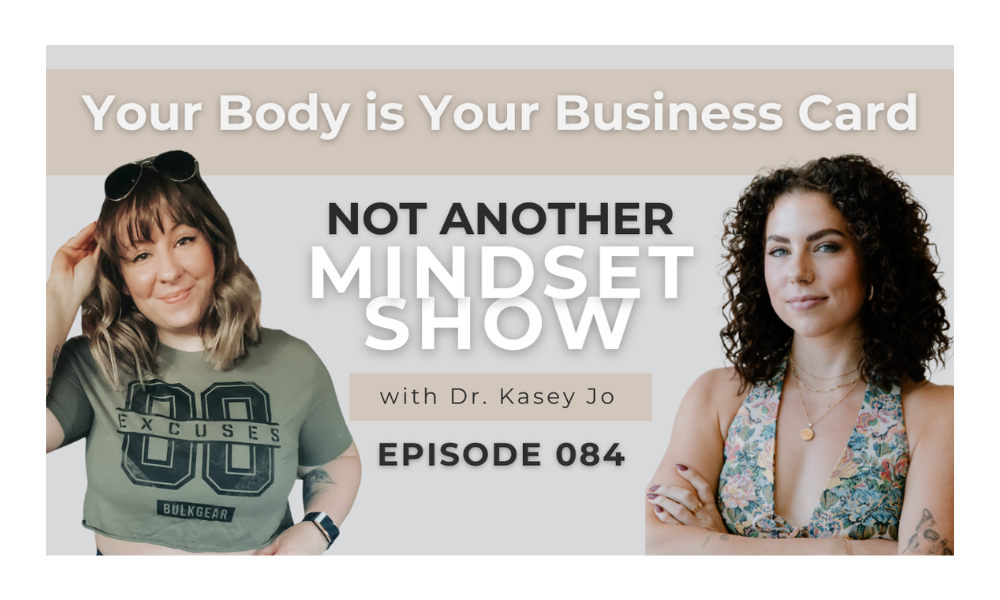
Challenging the idea that coaches need a certain look to be credible.
Have you ever felt pressure to look a certain way in order to sign more clients as a health or fitness coach? In this episode, Sarah Tierney and I unpack the belief that your body is your “business card,” and why that mindset can do more harm than good, for both you and your clients.
Sarah, who teaches body image inside The Health Mindset Coaching Certification, brings research-backed insight into this belief. We talk about how unexamined body image beliefs from coaches can unintentionally pass unhelpful patterns onto clients, the difference between positive and neutral body image, the impact of “look good naked” messaging on social media, and when (and how) it can be appropriate to talk about body transformation as a coach.
In this episode, we walk through a real-life example from an HMCC student. A registered dietitian who felt she couldn’t market her expertise because her body didn’t “look the part.” If you’re a coach trying to show up authentically online or support clients with body image goals without causing harm, this conversation offers a more nuanced framework to work from.
And if you want to support coaching clients beyond appearance-based outcomes, be sure to grab my 5 FREE lessons in behavior change and mindset. These lessons will help you coach clients through all-or-nothing thinking and fixed mindsets, stop getting in their own way, build self-control, and increase motivation and follow-through.
Episode Highlights
>>(1:40) Sarah on body image
>>(2:28) The concept of “Your Body as Your Business Card”
>>(4:15) Marketing strategies and body image: An example from a past student
>>(10:17) The importance of positive body image
>>(16:01) Balancing marketing and client expectation
>>(22:23) Psychological needs and body image
>>(27:07) Life transitions and their impact on fitness
>>(28:15) Practical advice for coaches and how to build a sustainable business beyond appearance
>>(37:40) Exposure therapy, social media presence, and community
Tune into the episode to rethink body image, credibility, and how coaches can show up without reinforcing harmful standards.
Rate, review, and subscribe to my podcast.
If you enjoyed this episode, I’d be incredibly grateful if you could rate and review the show on your favorite platform. Your feedback helps me improve and allows others to discover the show. I want to hear from you whether you’re loving the insights or have suggestions on how I can make the show even better!
Simply scroll down to the review section on Apple Podcasts, Spotify, or wherever you listen, and leave your thoughts. Your support means the world to me and helps me continue to bring you more of the content you enjoy.
Links From the Podcast
Want me to answer your questions on my next Q&A episode? Drop your questions here!
More podcast episodes from Not Another Mindset Show
Health Mindset Coaching Certification Instagram
Getting started with the Health Mindset Coaching Certification (5 FREE lessons included!)
Referenced in this episode:
HMCC Student, Nicole’s Instagram
Episode #20: ABCs of Behavior Change
Episode’s Full Transcript
Those are not like important qualities to have someone of someone in your life. Um, which yeah, kind of like brings this full circle then is like if you are a person of influence, not necessarily saying influencer here you have social media presence, you use that with your business, then you kind of do have a responsibility to.
Showcase other things, not just your body. Hello my friends, and welcome back to not another Mindset show. I’m your host, Dr. Kasey Jo. My goal with this podcast is to take the science of mindset and behavior change and distill it down into actionable takeaways for you. Together we’re gonna unpack research around motivations, self-sabotage, willpower, and so much more, and we’re going to take all of that and translate it into.
Strategies you can immediately apply to your health, fitness, relationships, business, marketing clients, all of the things. But just to be clear, it’s not all serious and sciencey around here. We’re gonna have a ton of fun too, and I’m so excited to share all of this with you. All right, let’s go ahead and get into the episode.
Hello my friends. Welcome back to not another mindset show. I’ve got Sarah with me again today and so excited about this topic. In fact, we just recorded another podcast episode and I got on and told her while I was washing and blow drying my hair, I had this idea that I think we need to bring to the podcast and if we’re being so honest, I haven’t really done much.
Body image content at all on the podcast with my solo episodes, because I don’t feel as informed as Sarah is. So yes, I’m the one with the PhD in psychology, but I don’t know everything. And this is a specific area that Sarah has poured so, so, so, so much time in better understanding and learning it. The content that she’s teaching in level two of the Health Mindset Coaching certification, we are working on another body image course type situation.
Sarah on body image
In fact, by the time this episode’s aired, it may actually already exist, and if it does, then we’ll make sure it’s in the show notes for you. So with that said, the idea topic of conversation that I wanted to bring to the podcast and bring to Sarah and have Sarah speak to it specifically is. Your body as your business card, as health and fitness coaches, which is the majority of you in this audience.
This is something you’ve heard. A lot before, and if you’ve not heard it, you’re at least thinking about it yourself. That I need to look a certain way in order to sign more clients because I am the example. It is. It is me that they want to be like and all of this. And I think also kind of get what gets wrapped up in this.
And maybe we can get into this too, Sarah is. With social media and you showing off your life and showing what you’re doing, and we are taught, and I don’t think it’s a necessarily like incorrect marketing strategy at all, is to show your day-to-day life and get people to get to know you because they’re buying you.
They’re, especially in the coaching world, they’re buying a relationship with you. So this can be problematic though, for a variety of reasons. When we look at it from actual. Like body image research and what’s out there and what we know about it, and also what we know from a behavior change mindset and just general psychology perspective.
The concept of “Your Body as Your Business Card”
So, off the bat, Sarah, what are your thoughts on, on this idea? And this is not something we didn’t really prep at all for this podcast. We were just like, let’s just get on and have a conversation about this idea that your body is your business card. What are, what are some first things that come to mind for you?
Oh, I have, okay, Kasey, we’re gonna just, we’re gonna, we’re just gonna do this live because my brain is going in five, five different ways. Okay. First and foremost. This comes up, actually, I wanna use a, a student that we had, can we start? There is this one student we had from our last HMCC cohort who was saying, okay, great, I’m getting all this like mindset education.
I’m getting certified. I’m an rd. So she has like clinical nutrition training and yet the resistance she was facing is marketing the skills that she is learning because she felt like her body didn’t look apart and. There’s a lot of things wrapped up in it. Obviously our body image as coaches for sure, needs a lot of TLC.
I don’t even know if Gen Z know what TLC means. Do you know what TLC means? Of course. Tender loving care. Is that real? Like Gen Z doesn’t know, I don’t know that Gen Z knows TLC. So if you are a Gen Z listener, I need to know this. Uh, I did not know the other Growth collective Colette calling her out. She didn’t know what, what was it?
The gift guides are that get mailed to us. Oh yeah. Like the holiday gift guide, the limited two, Pam, not pamphlets, I guess magazines really is what they were. Yeah. So I’m having a little bit of a culture shock of words that I’ve been saying that I’m like, oh, gen Z might not even know what that means. So, um.
Tender loving care. Right. That’s what it is. Like don’t go chasing waterfalls. That’s a tlc. I know. Well, that is, that’s what comes to mind every time I hear that too. So, uh, okay, let me find a different word. We, our, our body image is coaches also needs to be nurtured. And it is, if it’s not. It’s not worked on ourselves.
Marketing strategies and body image: An example from a past student
We can pass on some unhelpful beliefs about weight or about food or dieting or whatever. We can accidentally pass them on to, um, other people. As a matter of fact, I don’t know if I should say this. Yeah, well maybe if, if the people listening will just keep it to this podcast and don’t tell anyone. It’s like our secret, secret little club.
Uh, but it’s funny, I, I. Said very briefly in my Instagram stories, I was like, I really struggle with the predatory marketing of look good, naked, like that coaches will use to market their, their programs. I, I don’t know who, where I saw this, it must’ve been on threads or something, so it’s not a. No business comes to mind when I’m saying that.
Just so we’re all clear. I’ve heard it so many times. Are you kidding me? Yeah, yeah. Yeah. It’s so, it’s, and I find it very predatory, especially as women for a host of reasons. And someone who has not gone through at this point in time didn’t go through HMCC, didn’t like that I said that, and then they created a post about it.
Mm-hmm. And they were like, it’s okay for women to wanna have a goal of like, look good naked and be careful. ’cause you’re telling women. Trying to control them and their goals, and so that when you haven’t been inside the body image researcher, researcher research, and also maybe have done some own body image yourself, you could accidentally perpetuate some messages that could.
We’re gonna get to it at some point, but even like if you are talking, if that’s the content you’re making about, it’s okay to wanna look good naked. Of course, everyone has their own autonomy and agency and there is this term in body image researcher called beautification, and people are allowed to seek beautification in ways that feel good to them.
However, we know. From a female especially perspective that there tends to be when negative body images involved, which is a lot of what’s driving the look good, naked, like we’re trying to achieve a certain ideal, uh, look good naked. There’s typically an image in mind, like an ideal of what it looks like, right?
And so if we’re shooting for that, that increases risk factors for disordered eating, restrictive eating, um, food guilt, shame. Body dissatisfaction, all of this stuff, it gets really messy. Wellbeing tends to go down and so when you don’t have like a real understanding of the motives behind that type of stuff, you might be imposing your personal beliefs, not unbeknownst to you onto your clients or your future clients if you create content like that.
So to, I guess to like bring this full circle is your own body image work and even doing body image professional development. Through HMCC started out there is very essential for building a sustainable evidence-based business. Okay. That was my first riff. How did I do? No, so good. And I actually, I have a, a follow-up question for you.
Do you think that the motive underneath it is just, it is what matters most because where, where my brain is coming from with this is. Do we want people to take away from this episode that they should never be posting about their body, not talking about changing your body, being able to lose weight, build muscle?
Should we kind of do away with that messaging? Is there a way to still have that messaging and because there’s a way to still have that messaging because we’re also talking about like the motives. Behind it. Is it really wrong to want to lose weight and change your body and talk about it as a health and fitness coach?
And potentially even use, I mean, you see this all the time, and tons and tons of coaches do this where they say, here’s me in 2016 and here’s me now and I weigh the same weight, but my body, you know, so they are actually using their body in marketing. Is that inherently wrong or is there a right way to go about it?
There is a right way to go about it. It takes quite a bit of body image knowledge to know that. So I don’t know that, here’s, here’s the thing. I’ve said this to a few people, which is the health and fitness industry isn’t ready for what body image research has uncovered when it comes to talking about wanting to change your body.
The importance of positive body image
Uh, we have to understand that it is okay. The motive does matter with the reasoning for wanting to change your body. Um, but if the underlying needs to be positive body image, a lot of times when we’re talking about it’s okay to change your body, you are most likely, if I were to guess, talking to an audience that doesn’t have positive body image, most women don’t.
And so. I find that those conversations are the most effective on a one-on-one or in a small group setting. It is very challenging to succeed at talking about it’s okay to wanna have a smaller body. It’s very challenging to do right by your people. Listening to that on like in an audience, like in a social media general, one-sided conversation that is just.
What I have found, will I change my mind someday? Maybe, but I don’t think so. I’ve actually changed my mind to this opinion that I have now, which is, it’s very challenging to be like, it’s okay to wanna change your body there. The context needs to be there and you need to understand what type of people you have in your audience.
Hmm, okay. Which is, I don’t like giving that answer ’cause it disrupts health and fitness. Totally. Totally. It’s, yeah, it’s really the way that health and fitness be it coaching or programs or diets or any weight loss forever has been approached this way. Right. So it does, it kind of disrupts things, but also I think, and.
I think this is why both you and I have been successful in our businesses is because we’re talking about things differently. We are helping people rethink what they’ve always thought. And so for those of you listening are like, oh, but I don’t know how to do it any other way. Just know that doing it another way actually makes you stand out.
And that’s important, especially right now when we have more and more health and fitness coaches coming online than than ever before, and it continues to grow. So you really do need to see how you stand out and how you can stand out and what that looks like. So hopefully, maybe we’ll give you some ideas for how to do that and talk about this stuff differently in a way that is more informed and more effective and more helpful.
So I guess we’re, we’re kind of talking generally about, yeah, how your body is, your business card, but then also how that can like maybe backfire in your business and how that can lead to you attracting certain people to work with you that maybe later you’re like, why is this person so obsessed with the scale?
I don’t, this is so annoying. It’s like, well maybe because all you did was talk about those things, you know? So I think, which just brings a very important mess message forward that. You as the coach have the power to instill these things in your clients or not, and instead of just assuming like, oh, this person just is this way, or they’re uncoachable, or they, they don’t get it, or they’re not picking up on it, or like, I just want the easy clients.
Is it really that you want the easy clients or you just don’t know how to work with the harder clients? And this is like kind of a different tangent going down a different direction, but it all comes back to that same idea that you are in charge of how your clients are perceiving things. And yes, they still have their own perceptions, but you can still do a lot in that area.
So, um. I guess maybe some, some negatives, some of this backfiring. Sarah, what do you think? What comes up for you that your body is your business card like and people really, people being coaches, really leveraging their own appearance for their marketing strategies. Uh, actually, if I could back up a sec.
Yeah. Like, and just talk about using bodies as a business card in general, not just your own, but also client bodies too. Because what I will see is, to your point, and you kind of did, did say this, which is, if you’re talking about, let’s say you’re showing graphs of people losing weight, so and so lost 50 pounds, so and so lost 15 pounds.
They did it and here’s what we did. And then you get a client who’s very interested in that as well. Then what you notice is like, oh gosh, they’re very, this is definitely HMCC coded, so specifically speaking to HMCC students or grads right now, if you are noticing or you listen to Kasey’s podcast on extrinsic motivation, if you’re noticing that they’re very externally driven, that they don’t have a lot of personally meaningful reasons for why they’re wanting to make changes.
You maybe pick up on that, and so you’re maybe suggesting, oh, well, we need to slow it down a little bit. You’re trying to go be all in, do it a hundred percent. You’re not being successful. We kind of need to slow it down. But they’re seeing what you’re posting on social media, which is that you’re sticking to the plan every single day, seven days of the week, you’re showing, uh.
Posing, is that what I wanna say? Po like shots, posing shots, uh, selfies, that kind of thing. Uh, but then they’re hearing something completely different from you, which is, oh, we need to like, slow it down and not go all in and we need some self-compassion. They’re, they’re gonna be like, I didn’t sign up for that.
How come you can do it? And I can’t, and you’re telling me to slow down, or you’re telling me that I shouldn’t diet right now, or that I need to reverse diet? There’s a lot of, and then you’re gonna get some. Pushback with those conflicts with your clients. So, um, I think I kind of like walked around that question that you said, but I think it gets to the ultimate point is if you are documenting your journey in your body all of the time, that’s gonna be a normalized pattern with your clients.
Balancing marketing and client expectation
Mm-hmm. And then you’re gonna realize, oh, there’s eating problems associated to this are not successful, but it’s almost of your own doing by accident. Yeah. Without even realizing it. So when I, I think I slightly mentioned this before, but when you have clients who are so hung up on the scale or what their photos look like, and you’re just, and you’re over here like, yeah, but what are all the other reasons that you want to perform these health behaviors?
Don’t you wanna live longer and don’t you wanna have more energy and feel better and. Like boost your metabolism and all of that stuff. And then they’re, they’re confused because that’s mostly what you talk about on Instagram is like, here’s my before and afters and here’s what I’m doing for my diet and all of this stuff.
Like, yeah, you got, you gotta realize where you’re being inconsistent with what you are sharing. To prospective clients who then become clients and then what you’re expecting from them once they become clients. So yeah, there’s, there can be a big discrepancy there. And then coaches don’t realize, and this is you, no real fault of their own ’cause they’re just like, don’t have any training or understanding in this area, but they get upset when clients are doing something else that they don’t want them to do when the reality is that’s exactly what you’re showcasing.
Absolutely. And then we can kind of go back to the, to the heart of the question that you asked too, which is like, what are the downsides of using your own body as a business card? Um, what you’re implying is that the way, maybe it’s, maybe it’s a comfort thing actually. Maybe it’s, I don’t know how to display my knowledge.
Or skillset or coaching abilities or, I don’t really know how to market what I do. And so the easiest way is to rely on a visual, which we know historically it works. Mm-hmm. The visuals do work. Visuals will create buyers. And so it’s, I don’t wanna call it an easy way out ’cause it’s not, but it is, it is a default.
And so it might be that you just don’t have marketing skills yet. On how to market, what you do and how you do it. And so you rely on, on visuals and on your body, which is a marketing problem, and that’s fixable without or solvable. Without that, that’s solvable. That is solvable in and of itself without using your body.
But also it’s very interesting to reinforce a message that you gain competency through how you look. That’s very disempowering. That’s very much I’m gonna go there. Very laced in like weight stigma. Mm-hmm. Because what we’re then perpetuating is that people in different size bodies or who are not lean or quote unquote athletic looking, that they’re not as confident or as effective or they’re not walking the walk.
And I bet, you know, from your own client work that you. Have very hardworking clients, even if they still can’t figure out what’s getting in the way of them sticking to the plan. Like every single female on my client roster, I work with lawyers, I’ve worked with, uh, law enforcement. OBGYNs Cancer or oncologists, high ranking members of the military.
I’ve worked with other PE like psychology, PhDs. I have a registered dietician on my, on my roster. I have a behavior analyst on my roster, and so they all work very hard and they’re all very intelligent and just because they have their own food struggles, we don’t want to. Accidentally reinforce that the way that you look means something about you and the characteristics and qualities that you have.
Mm-hmm. And if you’re going around or thinking to yourself that you need to look a certain way in order to show your competency, you’re reinforcing some of those. It’s, it’s what? It’s, what’s it called? The, the term is like internalized weight stigma in a way that we never talk about. What comes up for you?
I don’t know how, like familiar you are with any of the words that I said. So what’s coming up for you? I, I know enough, but not, not, not to the degree that, you know, I think, um, something that came up for me that I think the audience would resonate with. As well is kind of the, the opposite commentary that the least interesting thing about you is what you look like.
So that I feel like fits in really well with this conversation. And it’s, if we pull out pieces of it rather than, the most interesting thing about you is what you look like the biggest transformation you can help your clients with has nothing to do with what they look like, you know? So. What is the transformation that you provide to your clients?
And if the only thing you can think about right now is I help them lose weight and then. You’re really pigeonholing yourself like you really are. And, and I just like, I don’t wanna be like mean here, but that’s not the best transformation. It’s just not. It’s, there’s so much more that you can do to help people.
And you know this ’cause even if you, in your head you’re thinking, yeah, that is the best transformation. I’m really good at helping people lose weight and change their body composition. Great. I bet 110%. There are other transformations that are happening there too, and maybe you just aren’t even really recognizing what you are capable of doing, what you’ve been doing in your coaching beyond body composition.
So that’s kind of like the main thing that that came up for me there. I was thinking like, what is at the heart of everything that I do as a coach? This language isn’t sexy in marketing, so I don’t really use it much, but what I really care and I’m interested in is what leads to overall wellbeing and life satisfaction.
That’s, that’s actually literally really the purpose of self-determination theory in general, which you know, is like my shtick. So they are very interested in what helps people realize wellbeing and life satisfaction, and they have found that. Goals that are rooted in like shooting for a certain image or upholding a certain image.
Did you do a podcast episode on this recently? Probably you probably we’re, we’re doing this thing again. Like you guys in the last week, I think three or four times Sarah heard me say, oh, I said this somewhere. Was that a reel? Was that a podcast? Was that a carousel? Was that one one of the Hm. CC calls? I, it just, it doesn’t matter.
Psychological needs and body image
But the answer is, is probably yes. The answer is yes. We will find it and put it in the ment for you. Yes. Yes. Really where I was going, um, and now I lost my train of thought. Uh, I think it. What, what the researchers from people who are well-versed in self-determination theory have discovered is that when you are trying to shoot for an image, an idealized image, or you wanna uphold an image that doesn’t do a very good job at meeting our basic psychological needs, which I know you do have a podcast on mm-hmm.
The ABCs. Mm-hmm. That one we can definitely link. Awesome. Awesome. Um, actually, what is, what was really cool about learning. Like, why, why do people, if it doesn’t do a very good job at satisfying our basic psychological needs, which means that it increases ill being as opposed to wellbeing, then why do people shoot for those types of goals?
And it is our way of trying to, like our, our basic psychological needs of autonomy, belongingness, and competence are not being met or satisfied. And so we’re trying to find other ways to generate. Having those needs met. And what better way, ’cause we’ve received messages throughout our entire lives of what we, what society appreciates from appearance.
Like what we, like, what’s beautiful. Um, it’s funny ’cause I just did a reel recently. I was on the TMZ website. Just, I was looking for something and. There was like three different posts that were like, hot Babe, who’s this? Hailey Bieber showing her booty cheeks, like, and I was like, best abs, best celebrity abs.
Yeah. What’s her, what’s her name? I think it was Amy Schumer, like lost a bunch of weight. So it’s like it’s, it’s. Those do something. They are emulating a message that booty photos from Hailey Bieber are attractive. They’re the standard and we internalize that. Unbeknownst to us it’s happening, happening subconsciously.
So we believe Then the whole point that I’m trying to get at is we believe that if we can look like similar or whatever, we’ve internalized as being ideal a lot in health and fitness. Is that like fit aesthetic? They call it like fitspo or fit Inspiration. Um, the fit ideal. Growing up, it was the thin ideal, and that’s probably still around now.
But when we put that on a pedestal and then we’re like, we’re going to. Put as much of our time, energy, financial resources towards that goal. That is our way of trying to satisfy our needs of feeling like we’re in control, feeling like we belong and we receive a lot of messages that if I were to change my appearance, people are gonna like me more.
I’m sure you have clients who are like, I can’t date unless I lose weight. Like I need to be palatable, my parents needs to be palatable for other people. And so it’s their way of trying to avoid rejection or shame. Um, it’s very natural to wanna. Belong to other people to wanna feel included. And when you go to a conference like we had the the Thrive event in 2025, when you go to that, you’re probably gonna see a lot of fitness coaches who, or nutrition coaches who look very similar, have similar body types.
No surprise. Why do we do this for a living? Because we care about nutrition and fitness and we make it our. Our whole personality, so, yeah. Um, unless you’re me and Kasey where you are, F1 and some, yeah. Yeah. Dubstep in Formula one is my dub is my real personality, and I have cows and books and tattoos, so, correct.
Yep. Yep. I love it. But I mean, that’s, that’s why people care. That’s why they chase these idealized images, is what, you know, the research calls it because they’re trying to, they wanna belong. And they wanna feel in control and they wanna feel effective at it. So that’s not gonna, that’s not gonna go away, but it doesn’t do a very good job at satisfying those, I don’t know about you, but I would hate to have friends who just like me because of the way that I look or Yeah.
You know, like you, you wouldn’t, you, you want people to wholeheartedly appreciate you from who, for who you are. And, but that’s not very sexy. It’s hard to sell that. Yeah, no, it’s so true. And like, to that point. When you think about any of your friends, loved ones, people you look up to is if the first thing is, oh, it’s because she’s beautiful, she’s fit, she’s skinny.
Like what? Those are not like important qualities to have someone of someone in your life. Um, which yeah, kind of like brings this full circle then is like, if you are. A person of influence, not necessarily saying influencer here you have social media presence. You use that with your business. Then you kind of do have a responsibility to.
Life transitions and their impact on fitness
Showcase other things, not just your body. And I think that, let me know your thoughts on this, but I, I think that can be part of it. To your point, we are talking about health and fitness and a lot of people are looking to change their body composition. And we’re not saying unless Sarah, you have a different opinion, but I don’t think you do.
We’re not saying there’s anything inherently wrong with that. It’s having that be the sole focus and the downstream effects that come from that. And whether it’s for yourself. ’cause yeah, you’re like perpetuating it in yourself then too, that like, I have to maintain this body, this body weight, this body shape, this body type.
Otherwise people aren’t gonna wanna work with me. Like that’s not a healthy place to be in for you as a coach either. Mm-hmm. And then we’re all gonna get older. We were just talking about this actually, like we all go through. Life transitions. Maybe you have kids, maybe, um, you become a caretaker. Uh, actually I have someone who’s a caretaker of a, um, mother who has Alzheimer’s.
And man, the demands that has on your life, your eating and exercise habits may shift. Um, but same thing, getting older, aging, especially for women menopause that the menopause transition is. Hard. And so if we want to be around for a while, we wanna have sustainable businesses that aren’t built on the fragility of something like your appearance.
What you can do at, at 25 is different than at 35, which is different at 45. So, oh, I had another thought, but I, it went on in my head. So what do you, what comes up for you with that? Yeah, I think I’m trying to, I’m trying to be in the shoes. In the earbuds of the people that are listening right now. Um, because I’m sure, and we kind of talked about this off air as well, I’m sure there are coaches out there who are listening and feel this.
Practical advice for coaches and how to build a sustainable business beyond appearance
Heavily that I don’t think I fit this fit person ideal, but I’ve been coaching for 15 years and I really know my shit and I get worried that people aren’t gonna take me seriously, aren’t gonna buy from me. I feel like that’s maybe the reason I’m not getting as many client signups is I should. It’s interesting too, ’cause I kind of, my app parallel example that I have is.
Not to like say it like because I’m hot, but because I’m not a bad looking person and because I am young, I get shit on for not knowing the stuff that I know. So Facebook ads are like the worst. That’s where these people really come out of the woodwork, but it’ll be like me. Photo of me advertising the five free lessons in mindset and behavior change that you get when you sign up for the HMCC wait list, which by the way, the link is in the show notes if you wanna check that out.
Um, and so it’s grabbing attention with, it’s a photo of me, I’m smiling, I’m happy, whatever. And then I have these. Old men usually commenting on it, saying, oh yeah, what do you, what do you know you pretty young thing about? Anything to do with mindset and psychology? Try getting some life experience first.
Or what’s a piece of paper? Meaning my PhD. What’s a piece of paper actually gonna do to tell me about my mindset? Wow, okay. I had an ad running for a long time and I had jean shorts on, and let me tell you the number of commentary just because of the fricking jean shorts. Like, okay, yeah, because this little thing in her Daisy Dukes knows anything about psychology.
It’s like, what? So I’m almost like, it’s that other side of things too, where. People just assume that I don’t know what I’m talking about because of what I look like, and so I can understand then where a coach might think, well, this is what I look like, so people aren’t gonna take me seriously or think that I, I know what I’m talking about.
So when I say all of that, what, what comes up for you? For me, having like that example kind of similar idea as this business card, body image type of situation, and the coaches out there who feel like, yeah, but that’s what I have to do, otherwise I’m not gonna be taken seriously. It people are gonna not take you seriously no matter what you look like, actually, because that’s so true.
I mean, how, there are people who, I mean, I have, a lot of my friends have like the, you know, the ABS aesthetic, like they have this like fitness aesthetic, right? And so I have had people in my dms who are like, I wouldn’t hire them because I don’t think they’ll be able to understand me funny enough. When I was hiring my own running coach there, there it’s a thing in the running coaching community where you put your fastest 5K, 10 k, half marathon and they’re all running six minute miles and your girl does not run a six minute mile.
And so I do have the thought. I was like, are you gonna be able to train someone like me? Who’s going, you know, from 5K to half marathon or, or whatever. Uh, and I have kids and I run this business, but So you, you’re gonna get it either way. Ah, so there’s the opposite effect too. Yeah. Mm-hmm. Mm-hmm. And I will say no even with, even if you have the, the paper.
So actually another person that comes to mind is our friend Alyssa. She. Is a hybrid athlete. She’s run a hundred miler race. She’s incredibly fit. Incredibly strong, but she does not, she’s not a hundred pounds like some of the ultra runners are. She is. She’s very strong. She’s like a muscle hamster is what we call her muscle hamster.
I know. Horrible. And she’s short too, so it’s like so fitting. No, it just does really fit her well. It’s her and she was so brilliant. She has a PhD and people say to her, people like will call her, uh, chubby. Which objectively she is not. She’s very, very, um, she’s leaner. She’s not chubby. So anyway, what I’m trying to say is we get it, no matter your, if you can run a hundred miler, if you have a PhD, if you have none of that, it happens.
You’re gonna get, get it anyway. So that’s why, regardless, you wanna build a business that’s built on a way stronger foundation and what you can do to. Help your clients. What problem are you actually trying to solve? Hopefully is above and beyond just body composition to bat loss. If you’re listening, you know, to this podcast, um, are you good at it?
What differentiates you from other people? That’s like the answers, and that’s the hard questions though. That’s, Hmm. It’s a lot easier to just follow what’s always been said. So much easier. But I think, yeah, kind of what we talked about before is like if you can make people think differently about something and do things differently or have your own unique take on things and talk about it differently.
I mean, even take this podcast episode and use what you’ve heard from Sarah and I today to say, I listened to this podcast episode that made me think differently about this and I really wanna share it with you and like about my story and pull it in in your own personal way and fashion and whatever.
Yeah, I think. I think this, gosh, we almost might need a part two, Kasey, I think, I think what could be helpful is if we could leave maybe one or two pieces of advice from you and I of like where to go from here, because we’re just saying we’re kind of maybe disrupting some people’s world, like mm-hmm. You just told me that this could have all these negative downstream effects, but you’re leaving me with nothing.
Mm-hmm. So maybe some thoughts of where to go from here. I think. If I could start, yeah, go. I think the first step is if we were to take away, let’s just say for whatever reason in this like dystopian world, social media was, uh, non-visual ever, and you couldn’t rely on visuals to sell what you do, how do you help people?
What would you talk about? Like, and, and maybe that’s just like a, a weird way to talk about like, let’s dive into your niche or what, like what problem help clients solve? Like from a marketing standpoint, why would I hire you? Who, who would hire you? Why would they choose you over somebody else? And I, I asked that question in our application, actually, why choose my company over others companies?
So. Really, I would just sit with that. You’re not gonna walk away like with a solution from this, from this podcast like right now. But really start thinking about what do you bring to the table that’s not your appearance. And the second piece, if I could give some very like tangible, how do you untether social media or marketing from your body is honestly like what comes to mind.
Kasey, I’d be curious what you think is like exposure therapy in a different way. Like how do we. Generate a, I don’t even know what I’m trying to say, but like, can you, can you like read my mind of like, the point that I’m trying to get at? Can you read my mind? Um, are you thinking Okay, where my brain went, but I I’m actually not sure I’m reading your mind.
Um, where it went is. Can you like follow or even look at who you do follow on Instagram, that whether they’re in the health and fitness industry or not, that they have a very compelling message that you pay attention to. Maybe you’ve purchased something from them before. For those of you who are Health Mindset Coaching certification students, obviously, I hope not that you didn’t enroll in HMCC because of what I look like.
So then what was it? What was it and that. Is going to be the core of what you could be doing in your business that isn’t just body focused. So that’s what I kind of was picking up on. And even just like right now, like pause this episode and go scroll Instagram and see like what catches your attention and what’s like at the top of your feed.
’cause that’s probably the people that you engage with most or you pay attention to most. Like what is it about what they’re doing that engages you and gets you interested and makes you pay attention and makes you want to buy from them. That is, has nothing to do with what they look like. Mm-hmm. I, I figured out where my brain was going wrong as I was talking because we have a variety of body sizes listening to this podcast.
Mm-hmm. And what I would suggest to them is gonna be different. We have one. Amazing, I’m actually gonna shout her out ’cause she’s so amazing. We have Nicole, you know Nicole? Yeah. She’s, um, very open about her own. Weight loss journey and she’s done amazing work in there. And I’ll, we, you have to go follow her.
Exposure therapy, social media presence, and community
Can we put, can I find her Instagram and we like plug her? Yeah, we can definitely throw it in the show notes. We’re gonna throw Nicole in the show notes. She’s fantastic. Uh, grad and she’s in level two with us right now. But, um. Uh, we, so we have coaches of a variety of different body sizes, and if you identify as someone who doesn’t have a, what we’ll call stereotypical body type that is in the health and fitness industry, and you’re nervous about showing up in that way, that’s where I was thinking exposure therapy esque ish could be used.
How can you, what is one thing you could do outside of your comfort zone to start showing up as who you are and like, give people a chance to see you like. Fully, like as you, as a whole person, whether it is a workout video or face to camera. Funny enough, I did that recently. I was never talking on, on Instagram, and now I have all these reels and, and stuff.
No, guys, the way that I full stopped when I saw her talking on her Instagram stories and was like. Whatever I’m doing right now doesn’t matter. I need to see what Sarah’s talking about. The all like my friends like Greg. I think it like Vanessa was like Greg, Sarah’s talking her stories and he sent me a video.
He live captured watching himself. Watch me for the first time. Guys, that’s the friends you need though. Like you don’t want people who just like you for the way that you look. You want people who are gonna do. That. Mm-hmm. And support you. So anyway, like maybe look at your friendship circle too, but all that to say, if you’re used to being off and not showing who you are, there’s no skipping the step of exposing yourself to that discomfort intention and like taking it with you.
It’s not how do we get rid of the tension, but it’s more so I like the invisible backpack analogy. You have an invisible backpack, stick that tension, that anxiety in it and take it with you. That’s what, and I actually told in my first story that I ever talked, I said, guys, this is weird. This is, I’m in my bedroom by myself talking to my phone.
This is weird. And people loved it. Of course they did. Yeah. You gotta give people a chance to get to know us. Oh, I, I love that. And I would also, for those of you who are listening and thinking, okay, yeah. Like, I get it. I understand like understood 20 minutes ago, like whatever, this person is also a very fit individual and is getting clients because she shares her body.
Um, I’m just like thinking, I’m not a specific person, but just in general, if you’re this person listening, I would consider for a second. Is the reason that you might feel like you need to push back on what we’re saying or that it’s not relevant to you and things are working just fine for you, the way that you’re doing them exactly like this and potentially using your body as a business card, I would consider is that simply maybe just because that’s the way you’ve always done it and that’s what you’ve seen other people do, so.
Is it possible that you’re feeling a little bit of pushback? There’s even just a piece in your mind that’s like, Hmm, I don’t really know. I feel, I feel like I still wanna keep doing this, or I think that still works. I think it’s a method that still works just fine. Is it potentially just because you don’t know how to do it any differently and it’s a lot easier to just keep doing it that way?
Mm-hmm. And it’s uncomfortable to try to figure out how would you do it? Otherwise, just, just something to, to noodle on there. And then if you need support in that, Kasey is Growth collective coming back in 2026. It’s, yeah, for the time being, it’s, it’s around for the foreseeable future. Um, by the time you’re listening to this episode, yeah.
We will have just welcomed some new entrepreneurs into the small business mentorship mini mastermind type of situation that I have called the Growth Collective. Sarah has been. Part of it. She’s a founding member and continues to be a member, hopefully forever. Um, so if you want some more intimate conversations with Sarah and I both, um, whether it’s business clients or otherwise, that is a fabulous place for you to be.
We only have like a maximum eight people. 10 at the total. Total. Most at this point. Um, because I spend so much one-on-one time with all of the business owners in the growth collective. We have a couple retreats per year and then, you know, I got like a 700. Thousand other things to do, like record podcasts with Sarah.
So I don’t have time to give the amount of effort and love and time and attention that I would like to if I had even more than eight people. So yeah, small little aside there about the Growth Collective, but these are conversations that we have in the Growth Collective all the time. Oh. All of the time.
Mm-hmm. Like there’s actually unread messages in there now that I am, we’re missing. There always is. There never isn’t.
Okay. Any final thoughts related to this conversation before we let people get on with their day? This is gonna be an ongoing conversation. I feel like it needs to be, it’s not a one and done. And, um, do we wanna plug that other thing? The other thing that doesn’t exist yet that might be existing at this point.
What? The guest speaker? The guest speaker. Oh, that part. See, I’m thinking about something else. No, I know. I knew you were going with that. Do we wanna plug this? So many secrets. Yeah. So many secrets. Um, yeah, go for it. You, you plug her because this was entirely your idea. So guys, I have a friend. She is an Oxford researcher on body image.
She actually studies. Fitness professionals and their body image. They’re not just clients, it’s like actual fitness professionals. And she’s been a fitness professional herself for a handful of years, but now she is getting her PhD, I think sometime in 2026, uh, and will be defending on. Fitness industry, body image issues and how we pass on.
It’s like how we pass our trauma onto our clients, lower KC trauma. Um, but anywho, because I teach the body image module inside level two, I really have found that there’s a need to support our coaches in their own body image work. IE on things like Body is your business card, and her name is Michelle Carroll and this is her whole shtick.
So I have asked her, and she’s accepted, she’s gonna come and do a guest lecture on body image for fitness coaches, but it’s behind a paywall. If you’re a level two student, you’re gonna get it. It’s gonna be a part of a bonus in that program going forward. Um, after we have her come on. And then we are going to also open it up to alumni members.
So you have to be in the alumni group. If you are not, you can join or I think we were gonna sell tickets to it, but it’s just gonna make more sense to join the alumni the way that uh mm-hmm. Because you’re gonna, you can either buy a ticket because we have to pay her, of course. ’cause you pay your researchers who are guest speaking for you.
So. Yeah. And this is HMCC students only, right? Yeah, you, you have to be a grad. You have to be a grad. So you have to be a grad if you’re in HMCC level one. You guys have so much on your plate right now, like. I couldn’t even fathom adding another thing to your list, especially if you did the business track.
So this is for grads, but the thing is, if you are in HMCC while you’re listening to this, it’s going to live in the alumni portal anyway, so you’ll get access to later. You can get access to it if you don’t have access now. And if you’re listening to this and you’re thinking about becoming a health mindset certified coach in the future.
Which, if you’ve got this far even into this episode, I would hope that you’re at least considering it then just know that that is something that you will have access to later on postgraduation from the certification. And when you become a member of the alumni group, that’ll be waiting for you. Um, but yeah, we are, we’re hoping to do some more stuff like that and bring in some other experts in these fields.
As I mentioned before, like Sarah at this point. Definitely knows more about body image than I do. ’cause she’s like gone kind of down that rabbit hole for so long at this point. And there are so many other people out there that we would love to bring too. So perhaps the start of even more fun education and unique perspectives for our students.
But yeah, anything else that’s. All right. Thank you all so much for tuning in. We hope this episode was helpful, made you think a little bit different about things. Hopefully you’re not like feeling paralysis analysis and not sure what to do next, but if you, if that’s the case. Our dms are open. I’m saying Sarah’s dms are open also, um, sometimes I had someone tell me this recently that they feel like you’re more approachable than I am.
So I had someone DM me and say, Hey, I was gonna just like send this to Sarah because I was kind of scared to send it to you. And I’m like, why? Why? I’m scary apparently. Maybe we need to release our voice memos and they’ll find that you’re very approachable. No, seriously. Uh, yeah. But anyway, feel free.
Shoot us a dm, let us know your thoughts on this episode. If there’s anything that you want us to touch on more that we talked about, like Sarah mentioned, like there could literally be a part two to this. Oh yeah, go ahead. I wanna note it because we’re gonna get a question about it. I bet you what we didn’t cover is when is it okay?
’cause I roundabout the question, when is it okay to wanna like change our bodies? Like. Oh yeah. Yeah. It’s not completely off limits, right. So maybe we we share how to tell. Yeah. Yeah. I like that. And I think too, what could be helpful, I mentioned this off air to Sarah beforehand, I have, um, an episode, uh. Uh, I’m not gonna remember the exact title, but it’s essentially like, is it okay if my clients only wanna focus on weight loss or what do I do if my clients solely focus on weight loss?
That episode does already exist, so I’ll make sure that that’s plugged in the show notes as well for you guys. ’cause that could give a, a little bit more. Context to this conversation and some of the things that we talked about, and if you still have questions and you still wanna dive in deeper, please let us know.
We really, really, really do take what you say and use that for episodes. So don’t just think if you send us something or throw it into the q and a form that’s linked in the show notes or in our question boxes that we throw up that we’re just like, hmm. Good question, but I don’t care enough to do like, no, literally, I, I in fact, for as far as the q and A form goes, that’s linked in the show notes.
And anytime I get on Instagram and I’m asking for questions, I’m pretty much answering every single one of them when I do my q and a episodes. And then if I’m not doing that, then I’m sending a screenshot to Sarah saying like, maybe we should do an episode on that, which I literally did that yesterday.
So, um, just know. We are doing this for you, so anything that you share with us, we are really, really, really taking into account for the content of the show and for everything really. So. Mm-hmm. Yeah. Okay. Let’s stop talking now. This one got longer than we had, us being like, yeah. 20 to 30 minute episodes.
That’s funny. No, not happening. Hilarious. Okay. Thank you all so much for being here and hanging out with us, and we’ll see you next time. And that’s a wrap for today’s episode of Not another Mindset show. If you enjoyed today’s episode, don’t forget to hit that subscribe button so you get notified of the next one.
Because if you’re anything like me, if the episodes aren’t popping up for you automatically, you’ll keep forgetting to come back to the show even if you really, really enjoyed it. So go ahead and hit that subscribe button and make it super easy for you and of course. If you wanna see more episodes just like this one, I’d love for you to let me know by leaving a review.
I know, I know it’s super annoying to do, but the few seconds that it takes means the world to me and also ensures that I can keep providing free education and value to you. And just to sweeten the deal, I am going to be picking a random reviewer every single month to receive a free workshop or product from me if you’re looking for more free resources.
Or just wanna connect, hang out, chat a little bit. Come find me on Instagram. I’m Coach Kasey, Jo over there. That is where I hang out the most in the land of social media. Alright, my friends, that is all I have for you this time. I so appreciate you being here and love to see you prioritizing your growth.
I’ll see you next time.